
I demand social justice. There is quite a difference between fighting for social equality and fighting for social justice…. If Negroes will stop making all this noise about social equality… and get down to business and build up a strong race, industrially, commercially, educationally and politically, everything social will come afterwards.
- M. Garvey, 1921, p. 94 (in Hill et al., 1985)
Introduction
Innovation and entrepreneurship in science, technology, engineering, and mathematics (STEM) have long been recognized as a catalyst for economic and social advancement. For many Black entrepreneurs, however, success is not defined by profit maximization alone. Unlike traditional profit-driven firms, many Black-owned businesses are founded by individuals driven by broader goals, including addressing systemic inequities and uplifting their communities (Dey & Steyaert, 2012), and not maximizing profit in favor of altruistic aims (Braga et al., 2014). Their enterprises are often rooted in explicit goals that address systemic inequities and work toward the collective uplift of their communities, a practice we term equity ethics entrepreneurship. Similarly, while the entrepreneurship literature characterizes social entrepreneurship as a relatively new phenomenon, upon closer examination of its principles and various definitions (see Dey & Steyaert, 2012; Kruse et al., 2021; Lubberink et al., 2018), we find that the existence of social entrepreneurs long predates the term itself (Peredo & McLean, 2006). We argue that to understand this phenomenon, scholars must look beyond the conventional, ahistorical narrative of social entrepreneurship and confront the deliberate erasure of Black innovation from the entrepreneurial canon. Nowhere is this erasure, and its subsequent correction, more critical than in the story of Marcus Garvey.
Although now recognized as a seminal Pan-Africanist leader, Garvey’s legacy is complex and was fiercely contested in his own time. His ambitious ventures, the Black Star Line and Negro Factories Corporation, were not only undermined by the U.S. government but were also met with sharp criticism from prominent Black contemporaries like W.E.B. Du Bois, who at times dismissed his methods and the movement he created. we contend that revisiting Garvey through the lens of equity ethics allows us to see past these historical divisions and recast his entrepreneurial endeavors not as a failure, but as a coherent and transformative praxis of racial and economic justice. His story serves as a foundational, large-scale exemplar of the very framework this paper introduces.
The dominant narrative of social entrepreneurship often presents a colorblind, depoliticized vision of “social good,” which fails to account for how race is embedded in the power structure in a way that perpetuates the very problems it seeks to solve. In contrast, equity ethics is a race-conscious, collectivist framework born from the lived experience of systemic oppression. It is characterized by motivations that include a) catalyzing systemic change, b) improving communities through collective action, and c) linking entrepreneurial skills to the pursuit of racial justice. By applying this lens to Garvey’s work, we provide a counter-narrative that challenges the epistemic violence of mainstream entrepreneurship scholarship.
This paper has three aims. First, it provides a theoretical background that critiques the limitations of mainstream social entrepreneurship literature and establishes the need for an equity ethics framework. Second, it presents the counter-narrative of Marcus Garvey, demonstrating how his ventures embodied equity ethics long before the term “social entrepreneurship” was coined. We elevate the case of Garvey, one of history’s most impactful and yet dishonored Black leaders, to demonstrate the historical roots of Black entrepreneurship as a force for racial justice and Black economic uplift. We then elaborate on the equity ethics framework itself, discussing its implications for contemporary Black STEM entrepreneurship and innovation education. Through this analysis, we make explicit that for many Black founders, entrepreneurship has always been, and continues to be, a vital tool in the fight for liberation. Finally, we make explicit the relationship between past and present acts of anti-Black racial and economic violence, drawing attention to the legacy and persistence of racism and its impact on Black lives (Barker et al., 2021; Carney, 2016; Khan-Cullors & bandele, 2018).
Theoretical Background
The Limits of Mainstream Social Entrepreneurship Scholarship
The dominant narrative of social entrepreneurship presents it as a universally benevolent force, motivated by altruism, humanitarianism, or a desire to fill service gaps left by governments and markets (Alvord et al., 2002; Audretsch et al., 2008; Thompson, 2002). Its goals are typically framed in apolitical, technocratic terms: scalability, sustainability, and measurable social outcomes like reducing carbon emissions or improving literacy rates (Mair & Martí, 2006; Zahra et al., 2009). However, this dominant narrative frequently operates within a supposedly race-neutral frame, treating “social good” as a neutral category and thereby erasing the specific histories of racialized oppression and the need for explicitly anti-racist, systemic disruption.
What is less understood within this literature is how entrepreneurship oriented toward socially just aims has functioned as a survival tactic for marginalized people of color and their collective communities. Specifically, racially minoritized founders have historically and contemporarily leveraged entrepreneurship as a means of collective racial, social, and economic uplift, defined here as equity ethics entrepreneurship. In the United States, racially minoritized people have repeatedly taken steps to ensure both personal and community welfare through ventures that necessitate sustained consideration of social and economic outcomes, often motivated directly by lived experiences of structural marginalization (Dy et al., 2018).
The limitations of mainstream social entrepreneurship frameworks become starkly evident in practice. Consider the case of TOMS Shoes, a canonical example of a “buy-one-give-one” social enterprise. While lauded for providing shoes to children in need, its model was widely criticized for destabilizing local economies and ignoring the root causes of poverty. It represented a depoliticized charity model that sidestepped questions of colonial legacies and economic justice. Similarly, many technology-focused social enterprises (Monroe-White, 2014) prioritize “impact” metrics that are quantifiable but shallow, such as the number of devices distributed in low-income communities; without challenging the racist algorithms or biased datasets those devices run on (Noble, 2018). This is the phrenology of good intentions: measuring the skull of poverty without diagnosing the tumor of systemic racism.
Martin and Osberg (2007) highlight social justice as a foundational component of the social entrepreneurial process. Their definition identifies three components: first, the identification of a stable yet unjust system that marginalizes individuals lacking financial or political power; second, the recognition of opportunity within this unjust system and the development of a socially inspired value proposition to challenge it; and third, the creation of new systems that harness the untapped potential of marginalized people to ensure a better future. Historically, these linkages can be traced to nonprofit organizations’ transformation from social service agents to commercial actors sustaining communities economically (Wallace, 1999). This shift brought “the traditional mission of social justice directly to terms with the economic marketplace as the viable basis for affecting long-term community development” (Wallace, 1999, p. 162). Yet, despite this lineage, mainstream social entrepreneurship scholarship continues to center the individual entrepreneur as the primary agent of change, mirroring conventional entrepreneurship models. In contrast, social justice traditions emphasize collectivism, mass mobilization, and humanistic strategies (Thekaekara & Thekaekara, 2007).
Empirical studies further suggest that entrepreneurial motivations are not evenly distributed across race and gender, calling into question the universality assumed in mainstream models. Earlier work found Black nascent entrepreneurs were primarily motivated by innovation, whereas their white counterparts emphasized both innovation and financial success (Edelman et al., 2010). More recent, large-scale analyses reinforce and deepen this racialized picture. For instance, a study using data from the U.S. Global Entrepreneurship Monitor (GEM) found that Black entrepreneurs consistently report higher levels of social entrepreneurial orientation; defined by the intention to create social value, compared to white entrepreneurs, even when controlling for factors like education and income (Hechavarría & Ingram, 2019; Hill et al., 2023; Sa & Lee, 2012). This aligns with gendered patterns where women entrepreneurs, across races, more frequently prioritize social and environmental value creation over financial value (Terjesen, 2017). Critically, research specific to high-growth technology entrepreneurship reveals that Black tech founders are significantly more likely than their white peers to articulate a “dual mission” of profit and purpose, explicitly connecting their venture’s success to community uplift and racial equity (Hunt et al., 2015; GMS, 2020). These patterns suggest that the nature of a venture and its core goals are often correlated with the founder’s raced and gendered experiences of structural marginalization, rather than reflecting a universal, colorblind entrepreneurial logic.
While the literature acknowledges multiple variants of social entrepreneurship and social enterprise (Kerlin, 2012), these approaches typically share a broad commitment to social justice (Kimmitt & Muñoz, 2018). However, Black-owned businesses have historically intersected more specifically with racial justice, positioning entrepreneurship not merely as a mechanism for social good but as a strategy of resistance, survival, and community defense (Alkon, 2018; Wang, 2021). Although social entrepreneurship has gained increasing attention in research, policymaking, and practice (Sekliuckiene & Kisielius, 2015), the term remains largely defined by whiteness and is often used as an umbrella construct that obscures racialized differences in motivation, risk, and purpose (Mair, 2010).
Terjesen’s (2017) and Sa and Lee’s (2012) comparative figures suggest a broad, gendered orientation toward social and environmental value among U.S. entrepreneurs. We treat this pattern as a baseline rather than a horizon. Black entrepreneurship largely emerged from collective experiences of anti-Black racism and operates as a praxis that frequently seeks to transform institutions rather than merely mitigate harms (Christian, 1988; Butler, 2012; Godwin et al., 2022; Kelley, 2022). Future work must disaggregate entrepreneurial motivation surveys by race and gender to empirically capture this emancipatory orientation (Choi & Majumdar, 2014). However, the definition of social entrepreneurship remains incomplete precisely because it excludes the historical and ongoing realities of Black entrepreneurship. Black entrepreneurship is grounded in African American theorizing, which Barbara Christian (1988) describes as dynamic, narrative, and rooted in lived struggle rather than abstracted Western logic:
For people of color have always theorized—but in forms quite different from the Western form of abstract logic… (p. 68)
Emerging from enduring experiences of anti-Black racism, Black entrepreneurship has functioned as both survival and resistance (Nurse, 2021; Walker, 2009; William, 2022). Existing while Black entails racial consciousness, collective identity, community responsibility, and a desire for structural change. This orientation exceeds dominant definitions of “social entrepreneurship”; it represents a mode of economic action aimed at liberation, collective resilience, and institutional transformation rather than incremental reform (Butler, 2012; Kelley, 2022; Godwin et al., 2022).
There is a growing acknowledgment among some social entrepreneurs and social justice advocates that short-term economic growth is insufficient for achieving sustained political empowerment (Thekaekara & Thekaekara, 2007). Yet the relationship between justice-seeking motivations and venture development among racially marginalized founders remains underexplored, particularly in ways that account for historical violence, racial capitalism, and epistemic erasure.
Finally, the study of social entrepreneurship and social innovation is further problematized by its lack of historical (Teasdale et al., 2023) or racialized contexts (Monroe-White & McGee, 2024). This omission sanitizes the field and obscures powerful examples of Black entrepreneurs whose work predates and exceeds the accepted chronology of social enterprise. As we argue throughout this paper, addressing this gap requires not only expanding the literature but confronting the intentional spread of misinformation that has erased Black entrepreneurial life and concealed the history of systemic anti-Black racial and economic violence, conditions under which equity ethics entrepreneurship emerged and persists.
Toward a Race-Conscious Understanding: Existing Scholarship at the Intersection
Mainstream social entrepreneurship often presents itself as a universally benevolent force, motivated by altruism, humanitarianism, or a desire to fill service gaps left by governments and markets. Its goals are typically framed in apolitical, technocratic terms: scalability, sustainability, and measurable social outcomes like reducing carbon emissions or improving literacy rates. However, a small but vital body of scholarship has begun to challenge this colorblindness by making an explicit connection between entrepreneurship and racial justice. This work often emerges from traditions of Black political economy and critical race theory, positioning Black business as a praxis of resistance and community development. Scholars like Alkon (2018) have documented how Black entrepreneurs engage in “entrepreneurship as activism,” using their ventures to resist forces like gentrification. Wang (2021) has highlighted the role of minority-serving institutions (HBCUs and HSIs) in fostering entrepreneurship within underserved communities, focusing on community-centric outcomes.
Equity ethics is a framework born from the lived experience of racial injustice and a linked fate with marginalized communities (Morris, 1993). It is unapologetically political and transformative, aiming not merely to mitigate harm within existing systems but to dismantle and rebuild them. Where a colorblind social enterprise might create a coding bootcamp to “improve employability,” an equity ethics-driven initiative would focus on creating STEM pathways for Black students specifically to challenge the segregated landscape of the tech industry or would develop tools to audit and dismantle biased algorithms used in hiring and policing (Monroe-White & McGee, 2024). This framework’s confrontational stance is operationalized through movements like #ShutDownSTEM, which catalyzes systemic change by naming anti-Blackness, improves communities through collective action via strikes and advocacy, and directly links the skills of STEM professionals to the pursuit of racial justice.
This paper builds on a longer lineage of Black economic thought that views business ownership as a tool for liberation and self-determination, from the mutual aid societies of the 19th century to the economic nationalism of the Black Power era (Butler, 2005; Ogbar, 2019). Equity ethics is situated within this emerging, race-conscious scholarly tradition. This framework is not new; it is tied to the long tradition of Black liberation movements. As we will present below, Marcus Garvey’s Universal Negro Improvement Association (UNIA) and the Black Wall Street in Tulsa were not merely exercises in “social good.” They were explicit projects of economic and political resistance, designed to create self-sufficient Black power bases in direct opposition to a white supremacist economy (D. L. Brown, 2015; J. A. Brown, 2016; Cook, 2014; Gara, n.d.; Mchie, n.d.; Messer et al., 2018; Shaheed, 2022). Their very existence was a systemic disruption. Thus, these efforts were consistent with equity ethics framework but perhaps not with the broader landscape of social entrepreneurship.
While equity ethics provides a lens to understand ventures like Garvey’s, its greater theoretical utility lies in its capacity to synthesize seemingly divergent Black liberation strategies as coherent, context-specific responses to shared structural oppression. Historical debates, such as the famed contention between Marcus Garvey and W.E.B. Du Bois, are often framed as irreconcilable conflicts between separatist nationalism and integrationist protest. An equity ethics framework, however, reinterprets this tension not as a fundamental philosophical schism, but as a strategic divergence within a shared commitment to catalyzing systemic change, community uplift, and linking skills to justice.
Garvey’s institution-building through the UNIA and Du Bois’s advocacy through the NAACP and his later Pan-African and economic cooperativism can both be understood as entrepreneurial acts guided by equity ethics yet deployed through different tactical repertoires shaped by their diagnoses of immediate constraints and possibilities (Jagmohan, 2020). Garvey, confronting the global scale of anti-Black violence and the utter exclusion from mainstream capital markets, pursued autonomous institutional power via the Black Star Line, which was a direct, collectivist build-out of independent infrastructure. Du Bois, while equally committed to Black economic development, often operated through a strategy of critical infiltration and advocacy, using research, propaganda, and political pressure to dismantle barriers within existing systems while also supporting cooperative economics. Equity ethics does not demand that these approaches be identical; rather, it provides a race-conscious analytical frame that recognizes both as legitimate, entrepreneurship-driven expressions of the same core motivations: survival, resistance, and the pursuit of power and self-determination in a hostile political economy. This reframing moves past historical vilification or hagiography, allowing us to see a spectrum of Black entrepreneurial activism where disagreement exists on methodology, but unity exists on the ultimate goal of liberation.
Systematically Differentiating Social Entrepreneurship and Equity Ethics
While social entrepreneurship and equity ethics may share a nominal commitment to justice, they are fundamentally distinct in their philosophical foundations, objectives, and practices. The table below provides a systematic comparison.
The contrasts made in the table above clarify why the existing social entrepreneurship literature provides an inadequate basis for understanding a figure like Marcus Garvey or the motivations of many modern Black STEM entrepreneurs who are motivated by equity ethics.
The Black Entrepreneur in America: A Historical Overview of Innovation and Resistance
The only protection against injustice in [wo]man is power - physical, financial, and scientific.
- M. Garvey, 1923
From the days of slavery to the present, Black entrepreneurship in America has been a profound act of both survival and liberation, often in direct response to exclusion, and guided by the strategic pursuit of the power Garvey named. The history of Black business is not a minor subplot in American economic history; it is a central narrative of innovation forged under the relentless pressure of systemic racism, making the experience of being Black in America complex, multifaceted, and profoundly communal (Cook, 2014; Lawson, 2014; Ogbar, 2019).
These traditions began during the era of enslavement, where Black ingenuity was simultaneously exploited and suppressed. Enslaved artisans, blacksmiths, carpenters, and agricultural experts possessed sophisticated STEM-related skills that built the wealth of the antebellum South. Africans in America were central to the development of American technological, agricultural, and industrial systems, even as the violent legal apparatus of slavery denied them ownership of their labor, inventions, and intellectual property (Cook, 2014; Rael, 2015).
Figures such as Norbert Rillieux, a free Black man born in New Orleans, revolutionized the sugar industry with his invention of the multiple-effect evaporator in the 1840s, a foundational advancement in chemical engineering. Yet, despite such contributions, Black innovators were almost universally denied recognition and economic benefit, reflecting the broader logics of racial capitalism that extracted Black talent while withholding power and protection.
After Emancipation, in the face of Black Codes, Jim Crow laws, and rampant racial terror, building independent economic ecosystems became a matter of communal necessity. Black entrepreneurship emerged as a collective strategy to ensure welfare, dignity, and survival in the absence of state protection, giving rise to robust Black business districts across the United States (Cook, 2014; Dy et al., 2018).
This tradition was exemplified most famously in districts such as Tulsa’s Greenwood, known as Black Wall Street. There, Black entrepreneurs built a self-sustaining economy of banks, hotels, newspapers, and clinics. Those Black owned businesses were a testament to what was possible when capital circulated within a community dedicated to mutual uplift (Clark, 2020). These hubs were not merely commercial centers but explicit political statements of Black self-determination, solidarity, and resistance, and thus became constant targets of white supremacist violence, as the 1921 Tulsa Race Massacre tragically demonstrated (1921 Tulsa Race Massacre, n.d.; Messer et al., 2018).
The website R-Rights-400Years.com highlights numerous pioneers whose stories illuminate the dual reality of brilliant innovation and systemic suppression, as well as the conscious application of equity ethics. For instance:
-
Thomas L. Jennings, who in 1821 became the first African American to receive a U.S. patent for a dry-scouring process, explicitly leveraged his innovation for racial justice, using the profits to fund abolitionist activism. This is a clear case of linking entrepreneurial success to collective liberation.
-
Granville T. Woods, known as the ‘Black Edison,’ held over 50 patents for crucial advancements in telegraphy and railway communications. His career was defined not only by technical genius but by a sustained, collective defense of Black intellectual property against systemic theft. The legal battles he waged against powerful corporations like Thomas Edison’s and George Westinghouse’s were themselves acts of institutional confrontation, seeking to secure economic power and recognition for Black inventors within a rigged system.
To further illustrate the equity ethics framework, we can look to innovators whose work was explicitly architected for community uplift. Lewis Latimer, a son of escaped slaves, not only made critical improvements to the lightbulb and drafted the patent for Alexander Graham Bell’s telephone but also co-founded the Unitarian Laymen’s League to address racial inequities and used his expertise to teach drafting to Black youth in New York City, directly linking his technical skills to community development. These examples range from the direct funding of liberation movements (Jennings) to the collective struggle for economic sovereignty within oppressive systems (Woods) to the dedicated channeling of expertise back into the community (Latimer). Together, they demonstrate that equity ethics entrepreneurship is defined not by innovation alone, but by the intentional deployment of that innovation (whether capital, legal defense, or knowledge), as a tool for racial justice and collective empowerment. Engaging in this kind of historical interrogation is essential for creating counter-narratives that challenge distorted majoritarian accounts of innovation and entrepreneurship. Without such interrogation, the histories of Black entrepreneurs are systematically undervalued, misrepresented, or erased, reinforcing a false narrative that innovation is racially neutral or predominantly white (Morgan, 2002; Peretti, 1994).
The historical context of Black entrepreneurship is essential for understanding a figure like Marcus Garvey. Garvey’s vision was a direct response to the systemic oppression of the era, including the anti-Black terror of the 1919 Red Summer and the Tulsa Massacre, alongside the broken promises of the post-WWI period. His call to action—“Up you mighty race you can accomplish what you will!”—and the UNIA’s motto of “One God, One Aim, One Destiny” resonated globally, creating the largest Black mass movement in history (Clarke, 1974; Cronon, 1960). The movement’s scale was such that, while some scholars estimated at least 6 million members, an accurate count was impossible due to the dangers of public membership and the need for secrecy (Jacques-Garvey, 1923). Yet over time, Garvey’s story has been distorted through intentional misinformation that manipulated public perception and diminished the significance of his contributions to Black leadership and economic self-determination. This lack of historical context has facilitated the vilification of Garvey, positioning him as a failed or dangerous outlier rather than as a servant-leader committed to Black empowerment. Revisiting Garvey’s story allows us to situate him properly within the long tradition of Black entrepreneurs who understood that in a racist society, building economic power is inseparable from the struggle for racial justice.
Marcus Garvey’s UNIA, the Black Star Line, and the FNC
One of the most impactful arms of the UNIA was The Negro World newspaper established in 1918 as the publishing arm of the UNIA. Its editors and contributors included T. Thomas Fortune, Zora Neale Hurston, and Arturo Alfonso Schomburg. Malcolm X’s parents were both UNIA members, and his mother a reporter for The Negro World (Digby-Junger, 1998; Vincent, 1989). At its height, despite suppression and prohibition by some nation states (Elkins, 1971), The Negro World had tens of thousands of subscribers across multiple continents including Central America, Africa, and Australia (Maynard, 2005). As a testament to Garvey’s success and the perceived threat posed by UNIA organizing, the Bureau of Investigation (BOI), established in 1908 and predecessor to the Federal Bureau of Investigation (FBI), opened a file on Garvey and deployed informants to infiltrate the UNIA (Kornweibel, 1985).
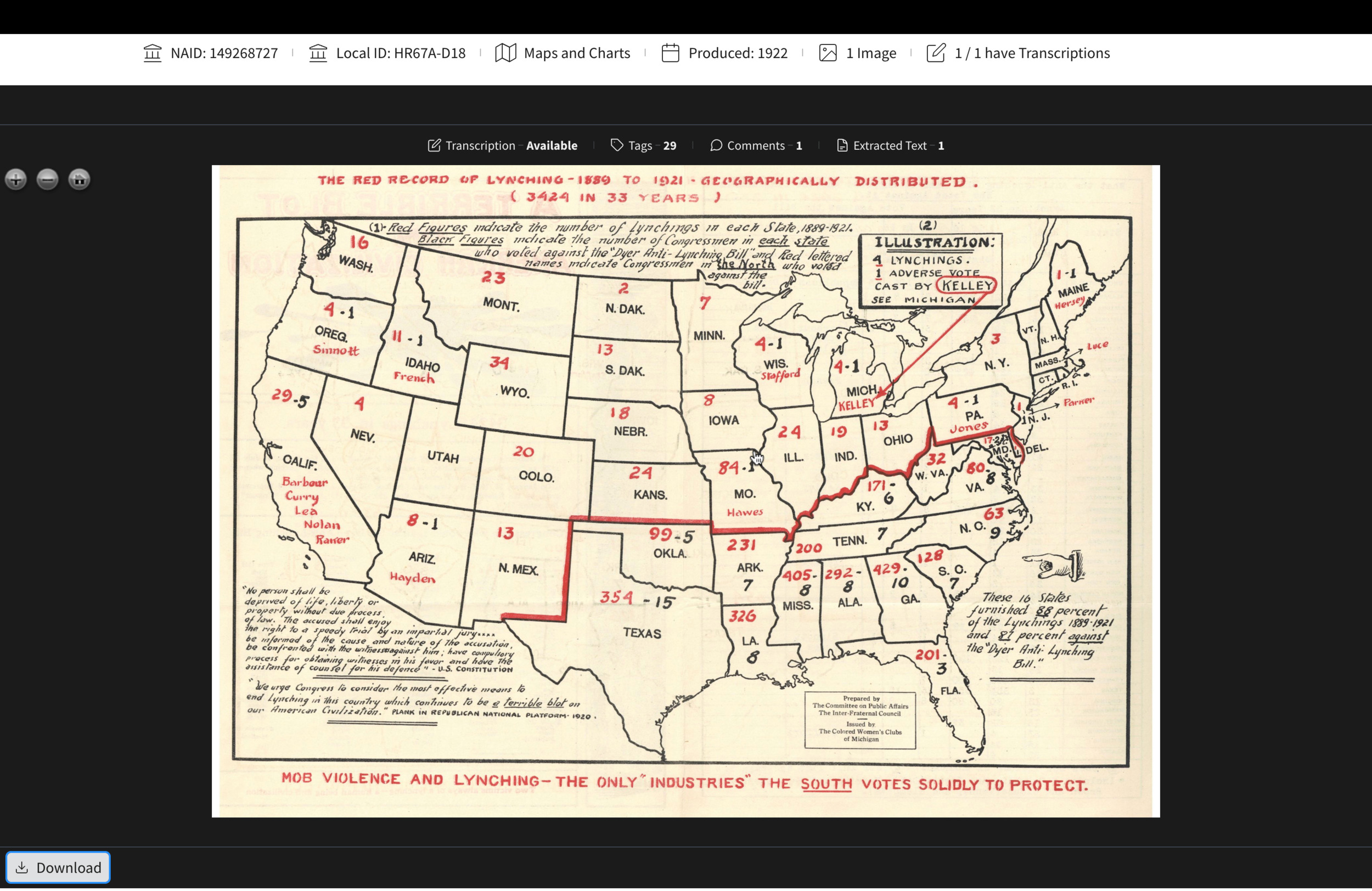
The inexorable link between Black empowerment and racial justice is exemplified by the UNIA’s founding in 1914, which under Marcus Mosiah Garvey catalyzed what many scholars describe as the largest Black mass movement in history (Cronon, 1960). Garvey’s call to action: “Up you mighty race you can accomplish what you will!” and the UNIA’s vision of "One God, One Aim, One Destiny" resonated globally amid the broken promises of the post–World War I period and escalating racial terror (Clarke, 1974) and the “Back to Africa” movements (Clark, 2020; Toole, 2021). This context included the anti-Black terroristic attacks surrounding the 1919 Red Summer (i.e., white-on-Black race riots in most major U.S. cities leading to the deaths of hundreds of Black people, from Nebraska to Florida), as well as the Tulsa Massacre of May 31, 1921 violence that coincided with intensified urgency for collective Black self-determination (Clark, 2020; Toole, 2021) (see Figure 1).
._accessed_on_.png)
In June 1919, at the height of the Red Summer, Garvey’s UNIA formally incorporated the Black Star Steamship Line (BSL) and the Negro Factories Corporation (NFC) company in Delaware. The NFC owned and operated multiple enterprises including dressmaking and tailor and millinery shops with items developed by Black designers, steam laundries, restaurants, and a publishing house. The BSL raised millions of dollars for the purchase of steamships like the Phyllis Wheatley and the Booker T. Washington, all staffed and run by Black employees. In 1920, 25,000 UNIA delegates from around the world gathered in New York City for the Black Star Line business meeting where they produced the “Declaration of Rights of the Negro Peoples of the World,” arguably the most important document to emerge from this convention (Clarke, 1974; Jacques-Garvey, 1923).
After 1920, the BSL owned three vessels equipped for both passenger and freight service to the West Indies, while plans were made to purchase several new ships for travel between South America and Africa. In the middle of a post-WWI recession, the UNIA purchased and operated over a quarter million dollars’ worth of shipping equipment. These accomplishments were unparalleled. However, as Kevin Dawson notes, “like most other industries - then and now - the maritime industry was implicitly and explicitly ‘reserved for whites only.’” Despite this systemic exclusion, the history of Black people is deeply interwoven into the fabric of global maritime history, yet their contributions have often been overlooked. This is a profound oversight, given that the African diaspora itself was a maritime event. It bore witness to an array of skills, knowledge, and resilience among enslaved Africans that contributed to maritime advancements, including a profound knowledge of seafaring, navigation, boat building, and fishing (Dawson, 2006). These skills became essential in the New World, contributing significantly to the boating and fishing industries in the Americas. Some enslaved individuals, for instance, were considered expert boatmen or fishermen, their skills honed from generations of living in riverine, coastal, or island communities in Africa. During the Civil War, enslaved peoples frequently seized the opportunity to escape to Union naval vessels, where they often served as pilots, guides, or crew. Many of these sailors leveraged their intimate knowledge of the Southern coast to aid the Union cause. The very skills that contributed to the economic success of the slave-holding society were the ones honed and nurtured under the harsh conditions of slavery. Yet, these contributions and this expertise have been overlooked and discounted within mainstream accounts of maritime history. The Black communities in the trading cities of the U.S. North before the Civil War were often in the port areas and many of the people in these communities worked as longshoreman, fisherman, boat riggers, etc.
The equity ethics framework helps to highlight the historical significance of Marcus Garvey’s ventures. This framework, as defined earlier, is characterized by motivations that include a) catalyzing systemic change, b) improving communities through collectivist justice, and c) directly linking entrepreneurial skills to the pursuit of racial justice. Marcus Garvey’s establishment of the UNIA in 1914 and its commercial arms stands as a foundational, large-scale exemplar of this framework. The entrepreneurial endeavors of the UNIA were an application of equity ethics in action.
The Black Star Line itself was the most audacious manifestation of this equity ethos. As a shipping company owned, financed, and operated by people of African descent, it was not merely a business; it was a geopolitical statement. It aimed to catalyze change by creating independent trade routes across the African diaspora, directly challenging the global economic system that excluded Black people. This was entrepreneurship explicitly linked to racial justice, seeking to build Black power through “physical, financial, and scientific” means, as Garvey had proclaimed.
The fate of these ventures further proves their alignment with the disruptive nature of equity ethics. Garvey could not successfully overcome the unscrupulous behavior of men in business for profit, where “property values exceeded human values, capitalism as it were” (Fierce, 1972, p. 55). The BSL was ultimately undermined (i.e., bribery-induced inflated sale prices of ships), and sabotaged (e.g., engines damaged by foreign matter added to the fuel) despite Garvey’s best attempts to secure its future. However, these ventures also became targets of a well-financed surveillance and infiltration apparatus: Garvey was perceived as a threat due to his stance on Black pride and Black collectivism, and federal authorities framed him as politically dangerous (Grant, 2003; Martin, 1976). In this context, the FBI labeled Garvey a “violent speaker and writer of extreme revolutionary tendencies,” underscoring how state surveillance constructed Garvey as a radical threat rather than an entrepreneur (Ellis, 1994).
Garvey became a prime target of J. Edgar Hoover and the Bureau of Investigation (BOI). He was convicted on controversial mail fraud charges in 1922, incarcerated in an Atlanta Federal Prison, and in 1927 was pardoned and immediately deported, never to return to the United States (Hobbs & Fitch, 1991). Federal law enforcement made several attempts to bring charges against Garvey before securing the mail fraud conviction, despite the lack of substantiated intent to commit a crime (Tolbert, 1987). These visionary enterprises were ultimately unable to withstand the persistent focus of the BOI and Hoover (then a junior officer) on Garvey’s purportedly “radical” actions, combined with the full weight of the U.S. government’s well-financed surveillance and infiltration apparatus (Grant, 2003; T. Martin, 1986). This systemic opposition had little to do with business failure; rather, it reflected the transformative threat posed by an enterprise grounded in equity ethics; one that sought a radical redistribution of power and opportunity. This historical vilification continues to shape dominant narratives by isolating Garvey’s story from the canon of entrepreneurship studies and framing his efforts as failure rather than as a systemically sabotaged experiment in Black economic self-determination.
Garvey was perceived as a threat by the U.S. government due to his stance on Black pride and Black collectivism. This parallels the experiences of other revered Black activists, such as Martin Luther King Jr., Shirley Chisolm, Ida B. Wells, and Muhammad Ali. This pattern of targeting has been documented across multiple Black leaders and movements and reflects how state institutions have historically treated Black collectivism as destabilizing (Curry, 2012; Wells, 1972). Such deliberate actions of erasure are manifestations of racism, imperialism, and colonization (Allahar, 2005). Dr. Martin Luther King Jr. described this type of erasure, where Black contributions to American life are ignored and their personhood stripped away, as “cultural homicide” (The Martin Luther King, Jr. Research and Education Institute, 2014).
Marcus Garvey also faced criticism from some of his Black contemporaries. Like other pioneering Black thought leaders, Garvey’s approach to Black political activism differed from that of other prominent Black liberation leaders (i.e., W.E.B Du Bois, Phillip Randolph, Cyril Briggs), leading to intracommunity conflict and attacks from those with the stature to diminish his personhood, while even referring to Garvey and his supporters in demeaning terms (Jagmohan, 2020). Some even recount that Black media outlets joined the chorus of critique against Garvey, which solidified these perspectives in print (Ijere, 1974). Garvey, as a Pan-Africanist, believed that collectivism amongst descendants of the African Diaspora was critical to the advancement of Black people and the unification of the race. As a lifelong author and journalist, each of Garvey’s publications were penned with the intent of educating Black people on Black issues and liberation (Rogoff et al., 1998). Rather than seeking personal gain, Garvey was a Black liberation leader using social entrepreneurship and innovation as a vessel to further his mission.
Garvey’s ventures, the Black Star Line and Negro Factories Corporation, were not isolated business failures but the logical apex of a tradition of Black empowerment. These enterprises were an audacious attempt to scale Black economic self-sufficiency to a global, Pan-African level. The relentless opposition he faced from the U.S. government and unscrupulous business actors was a direct continuation of the pattern used to undermine Black Wall Street and steal the patents of Black innovators. We see Marcus Garvey’s Black Star Line as a historical example of equity ethics entrepreneurship, given that enterprise’s explicit focus on economic self-sufficiency as racial justice, in direct opposition to white supremacist economic structures (T. Martin, 1986).
Equity Ethics: Race-Conscious Framing for Black STEM Entrepreneurship and Innovation Education
The current culture of entrepreneurship emphasizes individual achievement, profit and technological innovation. In contrast, Black STEM students, faculty, workers, and entrepreneurs overwhelmingly embody equity ethics and want to use their education and skills to foster racial, social, economic, and environmental justice for the masses (E. O. McGee et al., 2023). The equity ethics framework speaks to the motivations and core values of entrepreneurs and suggests that these business founders are motivated by collectivist concerns including remedying social injustices that these founders themselves have faced in their lived experience (Author 2, 2020). The intentions, motivations, and values of entrepreneurs have been widely researched ever since McClelland’s (1961) landmark study (cf. also Baron, 1998; Baum & Locke, 2004; Busenitz & Lau, 1996; Carsrud & Brännback, 2009; Hemingway, 2005; Jaén et al., 2013; Krueger, 2009). In the case of Black founders, their personal experiences of inequities and injustices shape their concerns about local and global discrepancies, such as the disproportionate impacts of climate change on marginalized communities and lower-income countries (Das et al., 2023).
Equity ethics, when infused into the ethos of entrepreneurship, can act as a powerful change agent, inspiring a revolutionary transformation within nascent entrepreneurs (e.g., including students and faculty), to steer founders toward confronting societal inequities and biases (Monroe-White & McGee, 2024). Simultaneously, founders influenced by equity ethics will pioneer innovative advancements necessary for Black liberation. Their strength lies not only in their ability to effect change from within but also in their drive to integrate the larger society into this transformative journey (Alves & Costa Vargas, 2017). Their equity ethics will keep this transformation alive and ensure a more equitable and just entrepreneurial ecosystem. The next generation of Black entrepreneurs, driven by collective resistance and justice, are the catalysts that will illuminate and eliminate our current and future disparities.
For example, research on social entrepreneurship highlights business models (e.g., hybrid nonprofits, B Corps) that achieve social goals with an additional focus on impact metrics (e.g., lives improved, jobs created) (Austin et al., 2012; Hiller, 2013). Alternatively, equity ethics centers around community co-construction. Equity ethics framework also prioritizes structural change through such means as policy advocacy or institutionalizing anti-racist practices in STEM departments (McGee, Engelman, Bui, 2025; Pagliarulo & Molinaro, 2015).
Collectivism is a common thread observed among those who exhibit equity ethics. McGee (2020a) found that the collectivist cultural influences of underrepresented and minoritized communities, lead students from these backgrounds to value cooperative interests in lieu of adopting the individualist attitudes more commonly found among non-minoritized groups (Cox, 2017; E. O. McGee et al., 2022; Oyserman & Harrison, 1998). This culturally determined tendency toward collectivism includes a greater capacity to conceptualize racism in terms of systems and structures rather than in individualistic, purely subjective terms.
The equity ethics framework holds that a history of oppression develops strong bonds among marginalized groups; these bonds foster a sense of responsibility and a linked fate with other oppressed peoples and causes. Common racialized experiences, many of them traumatic or entailing generational trauma, are at the root of equity ethics. From the enslavement of Africans to contemporary racism, Black Americans, in particular, have a common history of racialization, often centered around institutions like the Black church, historically Black colleges and universities (HBCUs), unions, and local community organizations which creates a shared context for the struggle against racial injustice, while holding the community together in solidarity (Hannah-Jones, 2019; E. McGee et al., 2021). Since racially marginalized people of color who are motivated by equity ethics often share racialized experiences, they develop social empathy i.e., “the ability to deeply understand people by perceiving or experiencing their life situations and as a result gain insight into structural inequalities and disparities” (Segal, 2011, pp. 266–267).
Discussion: Garvey’s Legacy, Equity Ethics in Praxis, and the Future of Black STEM Innovation
The historical counter-narrative of Marcus Garvey’s ventures is a vital blueprint precisely because it provides a concrete, large-scale exemplar of equity ethics in action. Revisiting Garvey’s work through this framework does more than correct the record; it actively demonstrates how the core characteristics of equity ethics manifest in entrepreneurial strategy, organizational form, and confrontational stance. By explicitly linking framework to history, we can extract critical lessons for the present.
First, Garvey’s model operationalized equity ethics for community improvement through collectivist action on a mass scale, directly challenging the “lone genius” mythology. The UNIA was a movement of hundreds of thousands, and the Black Star Line was capitalized not by elite investors but through thousands of small contributions from share-purchasing everyday Black people. This was entrepreneurship as collective financial pooling and democratic ownership, a stark contrast to the hyper-individualism of Silicon Valley. This praxis prefigures modern community-centric models: resource-pooling within Black communities (e.g., investment circles, crowdfunding platforms like WeFunder for Black ventures), the formation of tech cooperatives owned by their workers and users, and community-owned broadband initiatives. These models reject extractive venture capital in favor of a collectivist approach, ensuring that the benefits and governance of innovation remain with the communities they are designed to serve—a direct embodiment of equity ethics’ linked fate.
Second, Garvey’s work exemplifies equity ethics for directly linking entrepreneurial skill to the pursuit of racial justice, centering purpose-driven innovation. The Black Star Line was innovative not merely because it operated ships, but because it wielded maritime technology, logistics, and corporate finance toward the explicit, systemic purpose of Pan-African economic independence and geopolitical defiance. The “why” was inseparable from the “what.” This legacy is evident in today’s purpose-driven Black STEM entrepreneurs who develop algorithmic auditing tools to challenge biased facial recognition software, create fintech platforms designed explicitly to close the racial wealth gap, or build environmental sensors for communities facing environmental racism. Their innovation is not technology-for-its-own-sake but STEM deployed as a tool for racial justice, motivated by the same equity ethics that viewed a steamship line as an instrument of liberation.
Finally, Garvey’s focus on infrastructure embodies the most confrontational aspect of equity ethics: the motivation to catalyze systemic change by building autonomous power bases. The BSL was an attempt to create an independent trade network, that is a parallel infrastructure, free from colonial and white-supremacist control. This was not working within the system but building a new one to bypass and challenge it, making it a direct threat to established power. The modern equivalent is the fight for digital sovereignty: building community mesh networks to combat digital redlining, developing encrypted communication tools for activist communities under surveillance, and establishing data co-ops to protect Black data from exploitation and bias. These are 21st-century Black Star Lines: efforts to create sovereign digital and economic spaces that resist surveillance, algorithmic discrimination, and corporate control, thereby forging new pathways for self-determination.
By viewing Garvey not just as a political leader but as a pioneering equity ethics entrepreneur, we clarify the lineage connecting his ambitions to today’s Black innovators. His legacy demonstrates that for Black entrepreneurs in STEM, success is ultimately measured by the capacity to build collective power, foster resilience, and advance liberation. The opposition he faced from the U.S. government underscores a key tenet of equity ethics: ventures that truly seek to dismantle oppressive systems will inevitably be met with systemic resistance. This reality frames Marcus Garvey’s so-called “business failure” in a fundamentally different light.
Today, across every socioeconomic level, Black people have access to significantly less wealth, and thus less access to financial capital than non-underrepresented groups. Black founders face numerous obstacles such as disparities in funding for start-ups, racial discrimination, and an overall lack of support for their demographic-specific needs within the entrepreneurial ecosystem (Hackler & Harpel, 2021; Orozco, 2021; Pantin, 2017). However, recent evidence suggests that Blackwomen STEM founders’ networks aim to balance their commitment to equity alongside and within their entrepreneurial pursuits (Nicole et al., 2025). Although the evidence pertaining to the obstacles racially minoritized people face in entrepreneurship is clear, Black leaders are seeking to mitigate these difficulties and often turn to alternative methods of incubation for their ventures, such as pooling resources (Montgomery et al., 2012).
Collectivism fundamentally challenges the status quo portrayal in the scholarly literature of social entrepreneurs as rugged individuals (Leyden et al., 2014; Montgomery et al., 2012). This collectivist ethos is vividly embodied by modern entrepreneurs who operationalize equity ethics. Aisha “Pinky” Cole, founder of Slutty Vegan, demonstrated this by gifting graduating Clark Atlanta University students with LLCs—leveraging her commercial success to create a collective “pathway to entrepreneurship” for her community (Givens, 2022; Harris, 2022). A more structurally-focused example is Fearless Fund, a venture capital firm founded by Black women that directly confronts the systemic racism of funding ecosystems. By exclusively investing in women of color founders, it seeks not merely to increase representation but to dismantle the financial architecture of racial and gender exclusion, thereby catalyzing a radical redistribution of capital and opportunity. This stands in contrast to initiatives like CODE2040, which, while increasing diverse representation in tech, has been critiqued for not explicitly challenging Silicon Valley’s entrenched power structures (Brock, 2020; Noble, 2018). These varied examples illustrate a spectrum of contemporary equity ethics in action, from community patronage to the building of parallel, liberatory financial institutions—all echoing Garvey’s legacy of using economic enterprise for collective empowerment and systemic change.
Understanding that many in the Black community are using entrepreneurship as a means for racial and social justice, not only must we address the obstacles that discourage participation in innovation, and entrepreneurship, but educators and historians must also ensure that students know they are represented in its socio-historical legacy. Many fail to see themselves represented as entrepreneurs; minoritized populations account for 32% of the US population but only 18% of business owners (Minority Entrepreneurs - U.S. Committee on Small Business & Entrepreneurship, 2022). It is not enough to encourage students to imagine themselves as the future of innovation, and entrepreneurship, they must also recognize that this is not uncharted territory, and that their communities have an established history of success as business founders.
Conclusion
This manuscript makes three primary contributions to scholarship on entrepreneurship, STEM innovation, and racial justice. First, it advances equity ethics entrepreneurship as a race-conscious theoretical framework that challenges the colorblind assumptions embedded in mainstream social entrepreneurship literature and more accurately captures how many Black entrepreneurs mobilize STEM for collective liberation rather than profit maximization. Second, through a historically grounded counter-narrative of Marcus Garvey’s Black Star Line and affiliated ventures, the paper repositions Garvey not as a failed businessman but as a pioneering equity ethics entrepreneur whose work exemplifies collective resistance, infrastructural innovation, and economic self-determination under conditions of racialized state violence. Third, the paper demonstrates the contemporary relevance of this framework for Black STEM entrepreneurship education and practice, offering conceptual guidance for educators, researchers, and practitioners seeking to design innovation ecosystems that center racial justice, community co-ownership, and systemic transformation. Taken together, these contributions underscore that Black entrepreneurship has long functioned as a site of political struggle, technological imagination, and liberation. Recognizing this lineage is essential for shaping more just futures in STEM innovation.