
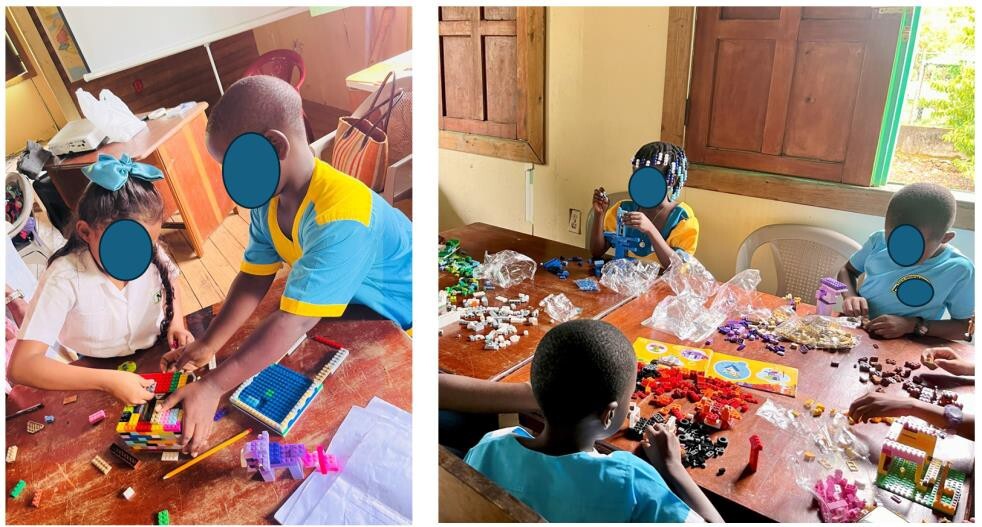
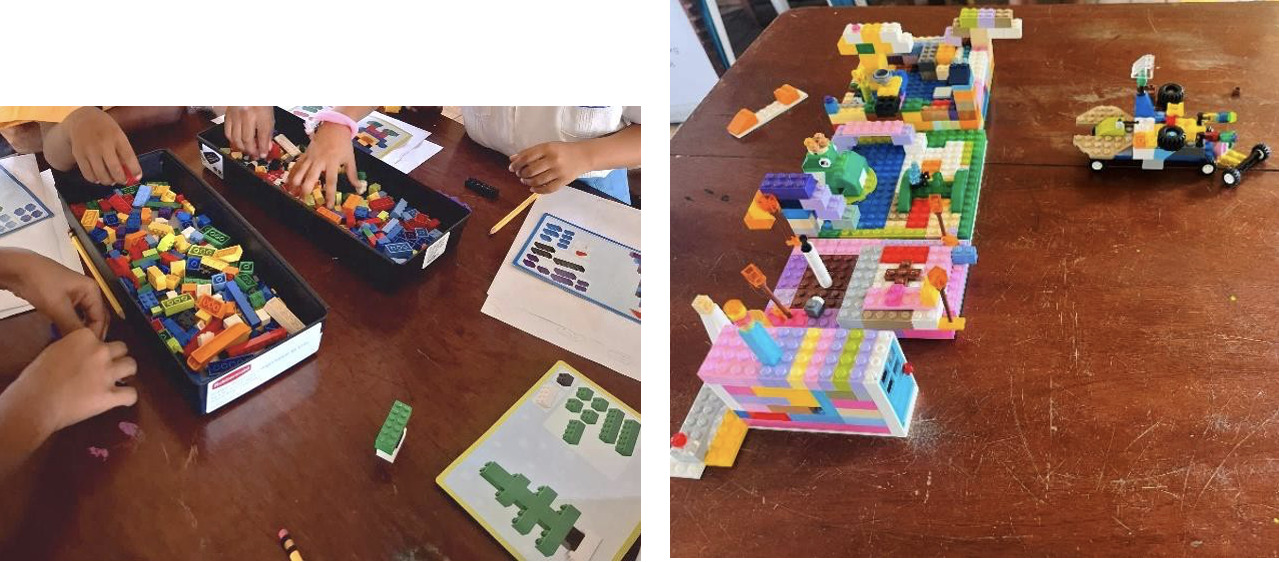
Science, technology, engineering, and mathematics (STEM) education has long been framed through Eurocentric perspectives, often omitting Indigenous and Afro-descendant knowledge systems[1] that have contributed to centuries of STEM. We argue that this narrow knowledge approach limits how historically underrepresented communities engage with and see themselves as innovators within STEM. The dominant discourse in STEM education tends to prioritize technological advancements aligned with Western epistemologies (Andrade-Molina & Valero, 2015, 2017; Andrade-Molina & Ravn, 2016), frequently overlooking the potential of diverse ways of knowing in shaping culturally sustaining STEM practices (R. Gutiérrez, 2012).
In response, this paper explores the intersections of Afrofuturism, Indigeneity, and STEM education. Afrofuturism has offered a vision of Black futures that resist oppression while centering cultural heritage and technological advancement (Gipson, 2019). However, little attention has been given to how Afrofuturism and Indigenous futurities interact within STEM discourse. By integrating Afro-Indigenous perspectives and epistemologies, we propose a framework that disrupts Eurocentric STEM narratives and envisions culturally sustaining approaches to STEM education (Padilla & Thomas Zapata, 2025; Paris & Alim, 2017).
This paper presents our analysis and reflections from a pilot study conducted with the Garifuna[2] community in the Global South. Drawing on a qualitative, exploratory case study approach (Yin, 2014), we examine how students and teachers engaged with STEM education using LEGO blocks, exploring emerging cultural disconnections and reconnections (Gauntlett, 2014; Souza et al., 2018). Most participants (80%) identified as Garifuna, while the remaining 20% identified as Mestizo[3]. We use the term Afro-Indigenous[4] to acknowledge both the predominant cultural heritage and the complex intersections of race, ethnicity, and identities from the Mestizo and Garifuna people participating in this study. We thus analyze how students’ design choices reflect the influence of modernity, globalization, and technology while highlighting the traditional cultural representations in their creations. Our analysis suggests that cooperative learning and community-centered knowledge, facilitated through LEGO systems, foster engagement, critical thinking, and the expression of cultural traits.
Research Questions
While prior scholarship has highlighted the importance of culturally sustaining approaches to STEM education (R. Gutiérrez, 2012; Paris & Alim, 2017), less is known about how Afro-Indigenous communities themselves navigate and merge ancestral knowledge with contemporary tools in hands-on design contexts. This gap motivates our inquiry and guides our research question: How do the designs and strategies of Afro-Indigenous students and teachers in a LEGO project reflect engagement with both modern and ancestral knowledge systems?
Positionality
Our identities and lived experiences inform how we engage with this research, interpret findings, and contribute to equity-driven conversations in STEM education. Thomas Zapata is an Afro-Latina and Garifuna mathematician, educator, and researcher whose work centers on equitable and culturally sustaining pedagogies. Having collaborated with Afro-Indigenous communities in Central America, she approaches this study as both scholar and community member, seeking to position STEM as a bridge to cultural sustainability. Padilla is an Afro-Latinx scholar with Indigenous ancestry, whose experiences navigating mestizo ideologies and systemic marginalization shape their commitment to cultural sustaining pedagogies. Their perspective as a Brown disabled activist-scholar grounds their engagement with the study’s epistemological stance[5]. Ruiz is a Garifuna anthropologist, professor, and researcher. His positionality as a member of the Garifuna community informs his scholarship, which centers on Indigenous, Afro-descendant, and diasporic experiences.
Positioning Afro-Indigenous Knowledge in STEM: Research Context
We conducted the study in a Garifuna community of a country in the Global South (which remains unidentified for anonymity). The community is located in a rural area where infrastructure and resources (both material and technological) are limited. The region lacks electricity and has unreliable transportation. Within this region, there are seven communities, each of approximately 2,000 to 5,000 inhabitants, with women and children comprising most of the population. All communities have their own school, serving Grades 1 through 9.
The Garifuna people have a rich cultural heritage that blends African, Arawak, and Carib influences. Their knowledge systems, languages, and traditions have been passed down through generations, grounding their ways of knowing, living, and learning. Historical and anthropological scholarship has documented aspects of Garifuna history, migration, language, and cultural practices (e.g., González, 1988; Kerns, 1989; Palacio, 2005). However, relatively little scholarship has examined Garifuna knowledge systems in relation to formal schooling, particularly within STEM education (Thomas Zapata, 2023). Much of the existing literature has also been produced from external perspectives (M. D. Anderson, 2009). In this study, we draw on both the available scholarship and the lived cultural knowledge of the community and the authors to situate the learning context and interpret the cultural practices that inform the LEGO project.
Indigenizing STEM: Intersections with Afro-Indigenous Knowledge
Relying on the broad theoretical umbrella of decoloniality (Mignolo, 2000, 2013; Quijano, 2008) and culturally sustaining pedagogies (CSP) (Paris, 2012, 2019) as well as community-based participatory research (Minkler & Wallerstein, 2008; Tandon & Hall, 2025), in the foregoing section, we explore the intersections between Afro-Indigenous knowledge systems and STEM education. We thus highlight research and theories aligned with Indigenous and Afro-descendant epistemologies while also considering the role of communal design thinking (Plattner et al., 2015), culturally responsive STEM education (Manuel et al., 2023; O’Leary et al., 2020), and model-based learning (Clement & Rea-Ramirez, 2008; Seel, 2017) as they relate to our study.
Decoloniality studies are paramount since they explain the epistemic marginalization of Indigenous and pan-African knowledges in terms of the structural conflation of European colonization, rationalist thinking, and modernity. For decolonial thinkers (Lander, 2000; Mignolo, 2000; Quijano, 1992), it is not a coincidence that STEM disciplines achieved exponential development in Western Europe during the modern era, right after the institution of colonial regimes of extraction and settlement throughout the Americas. There is therefore a causal link between the destitution of coloniality, which involves above all, knowledge not yet existent in the West, and the reconstitution of European identities in terms of “superior” civilizing superpowers (Mignolo, 2021; Quijano, 1992). Rationalism became the core epistemological way to make this ideological and knowledge transfer possible, embodying what Enrique Dussel (1995) calls “ego conquiro” (echoing sarcastically Descartes’ famous ego cogito phrasing). Therefore, decolonial theorizing intentionally disrupts the fictional rendition of a linear cumulation of civilizing STEM and rationalist knowledge in Europe from the Greco-Roman world to the present, an important first step toward opening STEM learning to alternative knowledges and practices outside the Western canon.
Creolized Horizons: The Renewing Power of STEM Afrofuturism
Afrofuturism has been described as a framework through which African diasporic communities imagine alternative technological futures and reclaim narratives historically excluded from dominant accounts of science and progress (Eshun, 2003; Nelson, 2002; Womack, 2013). Our conception of Afrofuturism, as implemented in this study, establishes an explicit nexus between pan-African (ways of being and becoming) and Indigeneity as it is lived and communally co-created by Garifuna and Mestizo students, their families, and rich communal contexts. This is congruent with how pan-African thinkers throughout the Caribbean conceive the creolization of knowledges (see, e.g., González, 1988; James, 1980; King, 2001). Creolization is a continuous process of relational blending which keeps alive the authenticity of Africanity and Indigeneity, along with other spheres of cultural, poetic, and relational enrichment in their unique wisdom-seeking collective practices. As Caribbean poet and philosopher Edouard Glissant (1997) points out, unlike mestizaje which blends and eliminates prior forms of knowing, relating, and identifying, creolization is a radical mode of coexistence whose unique non-linear ethos keeps intact the intrinsic and separate movement of each prior totality’s way of being, knowing, and becoming. Thus, in the case of creolization, the new blended whole, while different, is not greater than the parts and ways of knowing that made it possible. Through its dynamic and relational coexistence, this new whole keeps the authenticity of these knowledges and old totalities alive. This is why Glissant (1997) calls it an open totality, one whose knowledge and capacity for self-renewal via relational experiences and innovative engagements are always viable. In other words, the open totalities of creolization do not erase; they propel new horizons anchored on prior ways of being.
A creolized Afro-Indigenous open totality makes viable a much powerful form of Afrofuturism in STEM. This totality is not open to everyone because, under the current Eurocentric emphasis of the field, only selected communities possess the cultural and epistemic tools to understand and enact its potential. Its power resides in the fact that, without erasing Western ways of knowing, it makes sure not to allow the erasing of pan-African and Indigenous wisdom-seeking practices either. It avoids the destructive epistemicide (Santos, 2014) that Eurocentric hierarchies have created within traditional STEM. Our work, therefore, gives progressive STEM education practitioners a hint of what is possible if one unleashes the design and problem-solving power of communally grounded student-centeredness. In the open totality of their insipient hope and infinite creativity, one can begin to see the splendid mirror of a renewed and renewing Afrofuturism that does not surrender the spectrum of possibility beyond what appears to be the threshold of the impossible (Gipson, 2019).
Engineering Design as a Culturally Situated Practice
Engineering design is a central practice in STEM education, encompassing iterative problem-solving, prototyping, and optimization of solutions to real-world challenges (Bybee, 2010). Traditional curricula often present engineering as a linear, technical process, emphasizing individual achievement and abstract problem-solving that is disconnected from students’ cultural and environmental contexts (Bybee, 2010; Manuel et al., 2023). This framing risks marginalizing the knowledge and experiences of historically underrepresented communities, particularly those whose epistemologies are relational, communal, and environmentally attuned. In contrast, a culturally sustaining approach to engineering design views problem-solving as socially embedded and responsive to local realities (Bang & Medin, 2010). In this perspective, design is not solely the manipulation of materials according to standardized protocols, but a process shaped by intergenerational knowledge, communal labor practices, and lived experiences (Bang & Medin, 2010; Manuel et al., 2023).
For Afro-Indigenous youth, engineering decisions are often guided by environmental awareness, community responsibilities, and traditional knowledge systems which are forms of expertise that remain largely invisible in conventional STEM classrooms. In the LEGO-based workshop, students engaged in engineering design as a dynamic and culturally situated process. LEGO blocks became tools through which students could enact problem-solving grounded in both ancestral knowledge and contemporary STEM practices. This approach reframed engineering design as a space for negotiating community values, environmental adaptation, and collaborative reasoning, rather than merely demonstrating technical skill. By explicitly positioning engineering design in this way, the study connects students’ creative building and design thinking to broader theoretical frameworks of Afrofuturism, Indigenous futurities, and funds of knowledge, highlighting how STEM learning can be both innovative and culturally sustaining.
The LEGO System Curriculum
LEGO® Education offers structured curricula designed to foster creativity, engineering practices, and problem-solving within what the LEGO Group describes as the LEGO System—an open-ended framework that supports imaginative and collaborative learning (Gauntlett, 2014; K. D. Gutiérrez, 2017; Souza et al., 2018). Although widely adopted in STEM education, the curriculum often reflects Western assumptions about technology and innovation that overlook the cultural and historical contexts of diverse learners, particularly Afro-Indigenous students. For instance, many LEGO tasks emphasize individual invention (e.g., “design your own invention”) rather than collective problem-solving, which contrasts with Afro-Indigenous traditions of communal knowledge and shared responsibility (J. Anderson, 2020; Foote et al., 2013). Challenges frequently center on Western technological symbols—such as cars, skyscrapers, or robotic factories—offering limited opportunities for students to draw on local cultural narratives, land-based knowledge, or ancestral technologies.
At the same time, the flexibility of the LEGO System allows for meaningful adaptation. In our workshop, students, teachers, and facilitators engaged in communal design thinking grounded in Afro-Indigenous traditions of storytelling, resource-sharing, and intergenerational collaboration (Ahn et al., 2025; Turner et al., 2023). By adapting the curriculum to reflect community values and knowledge systems, STEM learning became a space for culturally sustaining practices that centered Garifuna identity, community knowledge, and collective problem-solving (Gay, 2018; K. D. Gutiérrez, 2017).
Research Design and Methods
This study employs a qualitative, descriptive, and explanatory case study approach, a methodology well-suited to exploring the complexities of real-world phenomena within their natural contexts (Yin, 2014). Case studies are particularly appropriate when the boundaries between the phenomenon and the context are blurred and when researchers seek to understand meaning-making as it unfolds in situ (Merriam & Tisdell, 2016; Stake, 1995; Yin, 2014). Our focus is on understanding how and why teachers and students respond to STEM education initiatives—in this case, a LEGO workshop situated within a rural Afro-Indigenous community. This design allows us to examine the workshop not as an isolated event, but as an interaction embedded within local cultural traditions, community values, and longstanding educational practices.
Our approach captures the phenomenon within its real-world context, allowing participants’ voices, experiences, and cultural dynamics to shape the findings. The explanatory dimension of the case study strengthens our ability to interpret how specific teaching strategies were taken up and why participants responded as they did, given the cultural, social, and community-specific factors at play. This orientation aligns with qualitative inquiry frameworks that emphasize depth over generalization and privilege participants’ lived experiences as central sources of knowledge (Creswell, 2017; Merriam & Tisdell, 2016).
Our work aligns with the principles of communal design thinking, which emphasize collective learning and decision-making processes in culturally diverse contexts. The participatory nature of the workshop allowed the authors, teachers, students, and community leaders to bring their lived experiences and knowledge systems into learning processes. The participatory interactions served not only as data sources but also as co-constructed spaces where cultural knowledge and STEM practices converged, consistent with qualitative approaches that foreground collaboration and relationality (Denzin & Lincoln, 2018). While not an ethnography, the study draws on ethnographic principles (e.g., attention to cultural nuance, and emphasis on social interaction) to observe how communal knowledge and STEM learning intersect in practice (Tandon & Hall, 2025).
The Lego Workshop: A Community-Driven Activity
Thomas Zapata was the lead organizer and instructor for this pilot LEGO Workshop. Seven local schools were invited to participate, and each selected four students—one from each of Grades 1 through 4 (based on teachers’ assessments of creativity, interest, and willingness to collaborate). While this purposive selection allowed teachers to identify students likely to engage actively in a new learning experience, it may have favored students already perceived as high-performing or creative. As such, the workshop may not fully represent the range of student experiences across the broader community, and the findings should be interpreted as illustrative of emerging communal practices rather than representative of all students in the region.
Prior to this initiative, neither teachers nor students had received formal STEM education (Basham et al., 2010). To address this, Thomas Zapata partnered with a local non-profit STEM foundation to introduce engineering concepts and creative problem-solving through LEGO-based activities. While the foundation provided resources and initial training, its members were not Afro-Indigenous, prompting important cultural negotiations (Plattner et al., 2015). Rather than imposing external frameworks, the workshop evolved through communal design thinking: teachers, students, and facilitators co-constructed activities that reflected local realities, needs, and knowledge systems (Ahn et al., 2025; Turner et al., 2023).
Engineering design is a foundational practice in STEM education, often characterized by iterative problem-solving, prototyping, and optimization (Bang & Medin, 2010; Bybee, 2010; Eglash et al., 2006). The workshop was grounded in the broader ethos of the LEGO System—an open, creative, and socially collaborative system that values both low barriers to entry and high potential for mastery (Gauntlett, 2014). Its modular nature allowed participants to start building with minimal instruction, while also encouraging imaginative exploration and culturally grounded design. As such, the workshop fostered an environment where STEM became a means of expressing both individual creativity and shared community knowledge.
Data Collection and Data Analysis
We collected data through observations, video recordings, photographs, and semi-structured interviews with teachers and students. Observational data provided insight into real-time classroom dynamics, teacher–student interactions, and community participation during the workshop. Video recordings and photographs captured students’ engagement with the LEGO activities, including collaborative discussions and design processes. Interviews with teachers and students complemented these observations by providing participants’ reflections on their experiences during the workshop.
To preserve the naturalistic nature of the activity, students and teachers were not equipped with individual microphones. While this meant that not all verbal interactions were captured, it allowed the researchers to observe interactions without introducing additional equipment that might alter participants’ behavior. Although some verbal exchanges may therefore be missing from the dataset, this approach aligns with the principles of naturalistic inquiry by prioritizing authentic participation and minimizing researcher interference. This limitation may have affected the complete capture of dialogic reasoning and moment-to-moment negotiations among students during collaborative design. To mitigate this limitation, Thomas Zapata and Ruiz relied on detailed observational field notes and video review of group interactions to reconstruct key moments of discussion and decision-making.
Data analysis followed an iterative thematic analysis approach. Video recordings were transcribed and combined with field notes and interview data. Initial codes were developed inductively from repeated readings of the transcripts and observational notes, while also being informed by the study’s conceptual focus on culturally grounded STEM learning. These preliminary codes captured patterns related to collaboration, community knowledge, problem-solving strategies, and the integration of local experiences in the engineering design process.
All authors participated in the coding process. Each author independently reviewed a subset of the transcripts and field notes to identify recurring patterns. The research team then met to compare coding decisions, discuss discrepancies, and refine the coding scheme. Through this collaborative process, related codes were grouped into broader analytical themes that captured how students and teachers engaged with engineering design in culturally meaningful ways. Independent coding and collective discussion allowed the team to reach consensus on the final themes presented in the findings. Examples of initial codes, indicators in the data, and representative excerpts that informed the development of the analytical themes are summarized in Table 1.
Throughout the analysis, particular attention was given to participants’ language use and the ways students connected engineering ideas with lived experiences in their community. Ethical approval for the study was obtained before data collection, and all participants (including students, teachers, and parents) provided informed consent or assent. These procedures ensured transparency, voluntary participation, and responsible handling of all collected data.
Procedure
Thomas Zapata invited two teachers and four students per school to participate in the workshop. First, Thomas Zapata contacted the school principals and requested that they select four students based on creativity, mathematics and/or science performance, and classroom participation. Mathematics and science performance included students’ prior achievements in classroom assessments, problem-solving tasks, and participation in local science fairs or hands-on projects. School principals from seven schools selected one student per grade from grades 1 to 4, resulting in 28 students.
In these rural Afro-Indigenous communities, schooling is often resource-limited, with teachers living within the community and serving as both educators and local leaders. Many classrooms include multiple grades simultaneously, and teachers are responsible for delivering instruction to students of varying ages and skill levels. This context influenced our decision to group students into Grades 1–2 and Grades 3–4 for workshop activities, reflecting local classroom practices where younger and older students often co-exist and learn together. This sampling approach is categorized as purposive, as students were selected for their interest and aptitude in mathematics, science, and engineering rather than randomly (Creswell, 2017; Yin, 2014).
Workshop Structure and Materials Familiarization
The selected students attended a three-day LEGO workshop at a communal center. Each day included four-hour sessions. During the first two days, students and teachers engaged in both structured instruction and open-ended exploration to familiarize themselves with LEGO blocks. Structured instruction included naming and differentiating LEGO blocks, such as connectors, wheels, windows, and doors, while students modeled potential constructions. Open-ended exploration allowed students to experiment and apply their own knowledge, experiences, and creativity. Videos provided by the local STEM foundation were also shown, including short demonstrations of simple and complex machines. After watching these videos, students discussed machines they had seen or used in their daily lives, generating ideas such as pulley systems for water wells, bicycle gears, and hand-operated grinders. These discussions helped bridge prior knowledge with the hands-on engineering tasks of the workshop. Teachers observed student engagement, problem-solving approaches, and collaboration, taking notes to guide scaffolding on the final day.
Competition Design and Grouping
The workshop was structured as a friendly competition to foster motivation, collaboration, and STEM skill development. Students were divided into two large groups: Grades 1–2 and Grades 3–4. Each large group of 14 students was further divided into three smaller teams, resulting in six total groups. Groups included students from multiple schools to encourage cross-school collaboration and knowledge sharing, allowing participants to exchange ideas about engineering projects and classroom practices in different communities. Teachers provided scaffolding during the competition by asking guiding questions and facilitating discussion, helping students clarify design ideas, troubleshoot constructions, and iteratively refine solutions. Evaluation followed a numerical rubric ranging from 1 to 3 points for key aspects of LEGO engineering, including creativity, structural stability, functional design, teamwork, and clarity of explanation. Community leaders served as judges, and other workshop witnesses observed the presentations. Judges independently scored each group, considering both the technical quality of the LEGO construction and the persuasiveness of the students’ explanations.
Workshop Projects
Students selected one project from six examples originally provided. Thomas-Zapata presented these project ideas to the teachers (see Table 2), and the teachers engaged in conversations with their students to help them choose a project that connected to real community needs while promoting STEM thinking and critical problem-solving. Some teachers also generated new project ideas or adjusted the original examples based on these discussions. More of these decisions and adaptations are described in the findings section.
During the last day of the workshop, students had three hours to build their designs, followed by presentations to judges. The workshop emphasized collaborative STEM problem-solving, iterative design, and the integration of students’ local knowledge with engineering concepts, enabling participants to apply both modern STEM skills and culturally relevant strategies (Ladson-Billings, 1995; Manuel et al., 2023).
Findings
Our findings highlight how students and teachers engaged in culturally grounded engineering practices during the LEGO workshop. Across the activities, participants drew on local knowledge, intergenerational expertise, and communal problem-solving to reframe STEM as a socially and culturally meaningful endeavor (Yosso, 2005; Bang & Medin, 2010). Through iterative design, collaborative decision-making, and reflection on lived experience, students and teachers enacted engineering practices that were both technically grounded and culturally sustaining (Afrofuturism; Indigenous futurities) (Gipson, 2019, Glissant, 1997). Below, we illustrate these findings through images of student projects, excerpts from dialogues, and reflections from teachers and community leaders.
1. Creolizing STEM: Reframing Engineering Through Local Epistemologies
A central finding of this study is the way students engaged in what we describe as creolizing STEM—a process in which engineering design was reinterpreted through Afro-Indigenous epistemologies, community practices, and relational ways of knowing. Although the LEGO materials and instruction booklet reflected dominant Western narratives of technological innovation (e.g., airplanes and industrial machines), students did not simply reproduce these models. Instead, they reworked the materials to address community-relevant concerns, demonstrating engineering as a culturally situated and socially meaningful practice.
Students’ early sketches and initial constructions often began by following the LEGO booklet. However, as collaborative dialogue unfolded, groups increasingly incorporated ideas drawn from their lived experiences. For example, one group shifted from constructing the airplane suggested in the instructions to designing a structure they described as “a house that can stay strong when the rain comes.” Another group proposed a water-collection structure inspired by how families gather rainwater during the rainy season. A third group designed a fishing-related tool, explaining that the idea came from observing relatives who fish along the coast. These examples illustrate how students moved from replicating provided models to designing artifacts connected to community needs and practices.
Figure 1 illustrates this shift. In the image on the left, students begin building by referencing the LEGO instruction booklet and replicating the suggested model. In the image on the right, the same group modifies the design as they discuss additional features and purposes for the structure. During this process, students negotiated ideas collectively, drawing on shared experiences and local knowledge to reshape the design.
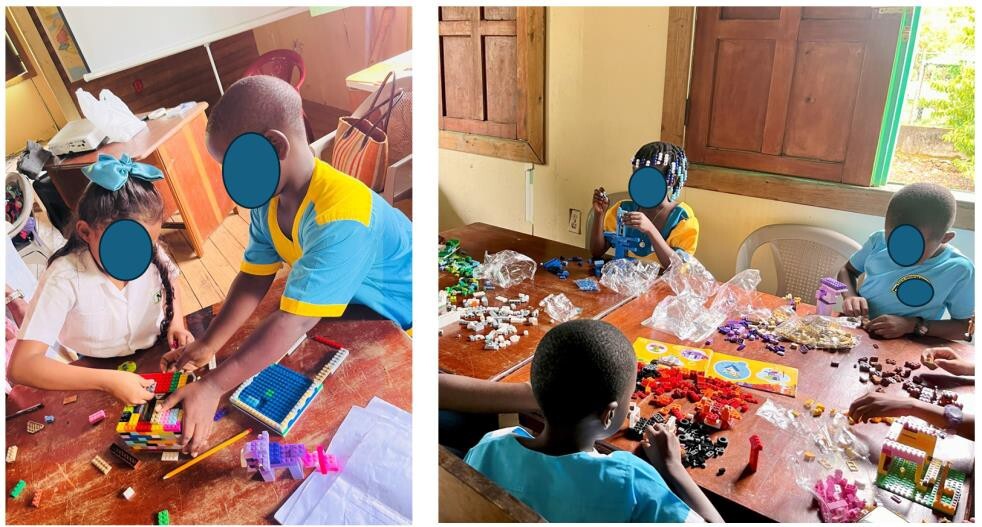
The collaborative engineering processes students enacted also reflected Afro-Indigenous cultural norms. Leadership roles rotated organically, tasks were distributed according to perceived strengths, and decisions emerged through consensus-building. As one student explained, “We share the work in our houses. Here we do the same.” In this way, problem-solving became not only a technical activity but also a cultural practice rooted in communal responsibility.
Together, these interactions illustrate Glissant’s (1997) concept of creolization, in which knowledge is transformed through relational encounters rather than simply combined. Through this process, LEGO materials became culturally flexible tools that students used to imagine engineering solutions grounded in their community realities.
This finding suggests that when students are given flexible design tools and opportunities for dialogue, engineering practices do not simply transfer across contexts; they are reinterpreted through local epistemologies, producing new forms of STEM knowledge rooted in community realities.
2. Designing Through Care and Interdependence: Engineering as a Communal Process
The second finding highlights how students engaged in collaborative engineering design as a culturally grounded practice. While Finding 1 illustrates how students reinterpreted engineering problems through local knowledge, this finding focuses on how the design process itself reflected Afro-Indigenous communal epistemologies. Collaboration extended beyond simple task division; it involved shared problem analysis, negotiation of trade-offs, and distributed decision-making that reflected relational ways of knowing (Bang & Medin, 2010). Ruiz, who conducted the field observations, held a dual positionality as both an anthropologist and a researcher familiar with the community context. This positioning allowed Ruiz to interpret students’ design decisions not only as technical problem-solving but also as expressions of culturally embedded practices and local knowledge.
Distributed Engineering and Collective Decision-Making
When constructing a LEGO bridge intended to address community flooding, one group organized themselves around complementary tasks: some students built the base, others focused on supports, and one student monitored stability as the structure developed. Students debated design decisions collectively:
Student 1: If we make this platform too tall, it might fall when it rains.
Student 2: Then we can add extra supports underneath. That’s what my uncle does at home with our patio.
During these exchanges, students integrated practical knowledge from everyday life with engineering reasoning. Observations documented how groups negotiated design trade-offs collectively rather than deferring to a single decision-maker. Students continually tested structural stability, adding or rearranging LEGO blocks to strengthen their models. This iterative process—testing, evaluating, and revising—mirrors authentic engineering practice, where solutions evolve through cycles of analysis and improvement (Figure 2).
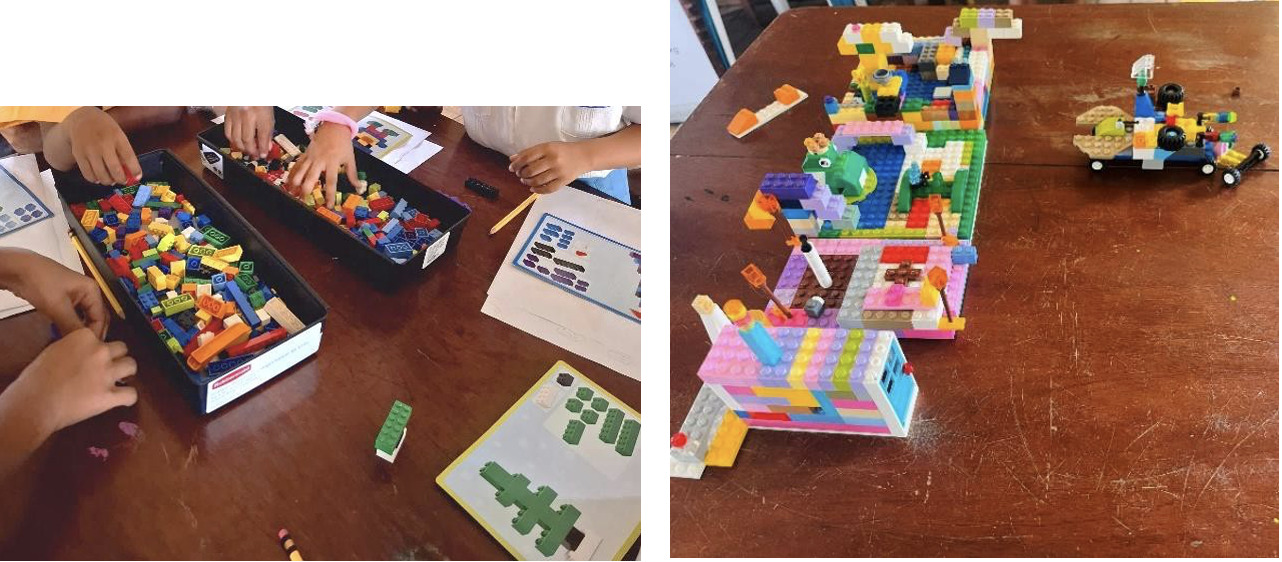
Beyond technical considerations, students incorporated community-based knowledge into their designs. One student suggested elevating the bridge slightly after recalling how water levels rise near their home during the rainy season. Another student proposed widening the pathway so that neighbors could cross together rather than individually. These considerations illustrate how engineering reasoning was intertwined with lived experiences and communal responsibility.
Scaffolding, Dialogic Reasoning, and Community Validation
Teachers and community members also played an important role in scaffolding students’ engineering thinking. Rather than providing direct answers, teachers posed questions that encouraged iterative reasoning:
Thomas Zapata: How can we make sure the bridge stays strong if more blocks are added?
Student 3: We can widen the base like in my home’s dock. That way it won’t tip.
Ms. Reyes: Excellent—you’re thinking about load distribution and how structures work in real situations.
From an observational standpoint, Ruiz interpreted these exchanges as students reasoning through trial and error while drawing on experiential knowledge from their community. Community members similarly recognized the significance of this type of learning. As Ronal, a community leader, noted during the workshop, activities like these allowed students to engage with problems that reflected real conditions in their community rather than abstract school exercises.
Group discussions throughout the building phase revealed sustained cycles of suggestion, testing, and refinement. Leadership roles shifted fluidly as students proposed new ideas or identified structural weaknesses. These patterns of interaction reflected Afro-Indigenous traditions of shared responsibility and collective problem-solving. By integrating technical experimentation with intergenerational knowledge and community awareness, students demonstrated engineering design principles in ways that were both technically meaningful and culturally grounded.
These practices suggest that engineering learning in Afro-Indigenous contexts may be organized through communal design thinking, where technical reasoning, lived experience, and collective responsibility operate as interconnected dimensions of STEM problem-solving.
3. Modeling from Experience: Lived Realities as Foundations for Engineering Design
The third finding demonstrates how students’ engineering decisions were grounded in the sociocultural and environmental realities of their daily lives. Rather than treating the LEGO tasks as abstract problems, students drew upon intergenerational knowledge, ecological awareness, and household practices to inform their models. These forms of knowledge—rarely recognized in formal schooling—served as central resources for engineering reasoning in the workshop.
Grounding Engineering in Sociocultural and Environmental Knowledge
Students consistently referenced environmental and infrastructural challenges they navigate at home. When building flood-safe houses, one group explained, “Our houses get water inside, so we lift things on blocks. We did that here, too.” Another group designed a fishing system modeled after local traps used along the coast. One student added, “My grandpa makes them like that,” highlighting how intergenerational expertise naturally informed engineering decisions.
Regional transportation challenges were also considered, with students designing structures to help people cross water safely or elevated walkways to keep community members dry during heavy rains. These were not imaginative creations but solutions recognized by their families and neighbors. These examples highlight the intellectual richness of local engineering knowledge embedded in everyday life. Teachers’ observations further illuminated how lived experiences shaped engineering processes. During a conversation:
Thomas-Zapata: I noticed that some groups really lit up during the fishing system challenge. They connected the task to their families or community.
Ms. Reyes: Exactly. One girl said, ‘My grandpa uses traps like that.’ I think these kids don’t always get asked to bring those experiences into school. But when they do, they feel proud.
Ruiz: What’s striking is how naturally they integrate ecological and technical reasoning. They are not just building; they are translating lived practices into functional engineering.
Thomas-Zapata: That pride really came through. I wonder how we can make space for more of that knowledge, so it’s not just about learning LEGO skills, but recognizing what they already bring.
Ronal also commented on students’ engagement: “I have not seen the kids this excited with school activities. It is usually games or sports that make them happy. But watching them today, they looked like they were having fun and learning at the same time.”
These insights align with Yosso’s (2005) notions of navigational and resistant capital: students leveraged local knowledge to navigate engineering challenges and resisted deficit framings. Their LEGO models became counter-narratives, affirming the sophistication embedded in their lived realities.
Engineering Design Processes and Iterative Problem-Solving
Students’ reasoning reflected authentic engineering design processes mediated by cultural and environmental knowledge. They analyzed problems, iterated on prototypes, tested designs, and optimized solutions in light of constraints and communal priorities. For example, when constructing flood-resistant platforms, students tested structural stability by simulating water flow with cups, observing which structures held up, and revising their designs accordingly. Dialogue highlighted this iterative reasoning:
Thomas-Zapata: I noticed your bridge wobbled when you added the water. How could you make it stronger?
Student: We can add more blocks under the base to hold the weight.
Ms. Reyes: Right, you’re thinking like engineers, testing and improving.
Ruiz: Notice how they are integrating household and environmental knowledge with experimental testing. They are engaged in culturally grounded STEM reasoning. Ronal: It’s amazing to see them thinking through the problem together and not just building what they imagine.
Students also considered trade-offs, such as balancing platform height for flood safety with build time and available LEGO materials. Leadership rotated naturally, and tasks were distributed based on strengths, reflecting communal labor practices. Iteration occurred collectively, reinforcing relational epistemologies (Bang & Medin, 2010). Intergenerational expertise informed constraints and optimization decisions. From a STEM education perspective, these practices exemplify situated engineering learning, where reasoning emerges from the interplay of cultural experience, environmental familiarity, material interaction, and collective dialogue. LEGO blocks became tools for problem-solving that connected environmental challenges, cultural knowledge, and engineering principles.
Overall, this finding shows that engineering design in Afro-Indigenous contexts is socially and environmentally situated, demonstrating how communal knowledge enriches reasoning, challenges deficit narratives, and produces culturally meaningful STEM innovations.
Discussion: On the Road Toward Decolonial and Culturally Sustaining STEM
This paper has explored how decoloniality, culturally sustaining pedagogies, and equity-based STEM education intersect through communal design modeling. As indicated above, there are observational and direct quotes throughout the paper that evidence Yosso’s (2005) notions of navigational and resistant capital. Likewise, there is evidence of creolized manifestations of communal design that invokes contextualized and intergenerational wisdom, displaying a strong sense of communal pride, without placing disciplinary STEM knowledges above culturally transmitted funds of knowledge. However, there is no evidence of radical manifestations of politically informed decoloniality or explicit recognition of epistemicide by students. Drawing from Santos’ (2014) notion of epistemicide, we have highlighted how students and teachers engage in practices that resist erasure. They do foreground communal knowledges, intergenerational learning, and culturally grounded problem-solving. Nonetheless, there are not explicit manifestations of a collective consciousness of epistemicide, particularly in relation to STEM disciplinary modes of Eurocentrism.
For us, the indirect forms of communal and intergenerational resistance just noted are evidence of latent forms of Afro-futurism in action. These Afro-futurist elements were not expressed through explicit visual symbols or cultural color palettes within the LEGO models. Instead, they emerged through students’ collective conversations and their imaginative orientation toward the future of their community. In several instances, students discussed how their designs could improve everyday life in their village, particularly in relation to flooding, transportation, and fishing practices. Such future-oriented technological imaginaries, grounded in communal well-being and environmental knowledge, resonate with Afro-futurist traditions that position Black and Afro-diasporic communities as active agents in shaping alternative technological futures. The potential to further cultivate these emergent Afro-futurist orientations opens the door to explorations with students in studies of this kind, to be conducted in these communities in upcoming collaborations. Yet it remains to be seen whether such explicit sociopolitical approaches elicit resistance from teachers and/or community leaders. Therefore, important participatory work with leaders to explore their preferences and priorities is advised.
On the other hand, we also noted that students enacted translational knowledge[6] through LEGO-based engineering design. They did so by bridging lived experience, environmental awareness, and technological design in ways that challenge the notion of STEM as culturally neutral. Furthermore, students’ collaborative processes (particularly their intuitive use of rotating leadership and shared decision-making) exemplified communal learning in action. Their designs were not only functional but also culturally resonant, integrating local knowledge of flood management, transportation, and fishing into tangible engineering solutions. In doing so, students became active agents in imagining STEM futures that are socially, environmentally, and culturally responsive.
Teachers, similarly, enacted a pedagogy of communal horizontality, balancing collaboration and competition in ways that resisted the individualist logics dominant in many STEM spaces. Their facilitation drew on deep community knowledge, shared cultural norms, and co-participation with the researcher, highlighting the value of researcher positionality in participatory and community-based STEM work. This positioning allowed for mutual accountability, trust, and investment in the learning process, reinforcing that culturally sustaining STEM practices require relationships as much as technical knowledge. Community stakeholders also affirmed the significance of this approach. One community leader, Ronald (pseudonym), noted that he had rarely seen children so engaged with educational activities outside of games or sports. Observing students’ excitement and deep involvement highlighted how culturally grounded STEM experiences can catalyze curiosity, confidence, and sustained engagement in learning.
Operationalizing STEM through decolonial and culturally sustaining frameworks has significant implications for the fields of STEM education and transdisciplinary equity. First of all, it challenges dominant Eurocentric narratives, reframing innovation as a collective, contextually embedded practice rather than an individualist endeavor.
Secondly, this approach is not only relevant in the global South. It can inform and transform equity-oriented STEM initiatives in the global North as well. For example, teacher education programs could incorporate exchange experiences, summer institutes, or community-based research immersions to allow candidates from the global North to engage with pedagogies grounded in communal epistemologies.
Finally, our study contributes to a growing recognition that engineering design and STEM problem-solving are inherently sociocultural and sociopolitical practices. By centering lived experience, community values, and intergenerational knowledge, STEM instruction can move beyond technical mastery to cultivate critical thinking, social responsibility, and culturally sustaining innovation. Future research should continue to explore mechanisms for integrating Afro-Indigenous and other Indigenous knowledge systems into formal STEM curricula, assess long-term impacts on student agency and identity, and investigate scalable models that respect local epistemologies while fostering cross-cultural learning and innovation.
Acknowledgement
We gratefully acknowledge the partnership and support of [a local STEM-focused foundation], whose collaboration was essential to the development of the workshop and the implementation of this project. We also thank the participating educators, students, and community members for their generosity, insights, and engagement throughout the study.
In presenting these knowledge systems as separate, it is important to point out that some scholars (e.g., Dei, 2000, 2017) argue that Africans should be understood as Indigenous to the African continent. Taking this view complicates the identity Afro-Indigenous by highlighting how colonialism forcibly separated African Indigeneity from Indigenous identities in the Americas. For this reason, decolonial thinkers such as Quijano problematize mestizaje and race “inventions” in the Americas, linking them to the structural coupling of modernity and coloniality (see, e.g., Quijano & Wallerstein, 1992). Our specific use of the term Indigenous alludes to pan-Indigenous frameworks specific to the Americas broadly conceived and to the Caribbean in particular as they have been transmitted and enacted within local Garifuna knowledge systems. In doing so, we also stress that these knowledge systems mingle in a creolizing fashion along with Afro-descendant identity dimensions that display distinct epistemic tendencies. Their complex manifestations are beyond the scope of the present paper apart from highlighting their common communal design thinking and decolonial ethos.
The Garifuna are Afro-Indigenous people descended from West/Central Africans and Indigenous Kalinago, with a distinct language, culture, and history rooted in resistance and survival across Central America’s Caribbean coast.
Mestizo refers to individuals of mixed Indigenous and European (primarily Spanish) ancestry, a demographic group that is prevalent throughout Latin America
Because the majority of participants (80%) in this study were Garifuna, we refer to the population as Afro-Indigenous throughout our narrative to honor both the dominant cultural identity and its Afro-Indigenous roots, while acknowledging the presence of non-Garifuna participants.
Our epistemological stance is grounded in a sociocultural and constructivist perspective, recognizing knowledge as co-constructed through social interaction, cultural practices, and lived experiences. Refer to Padilla & Thomas Zapata (2025) to learn more about the positionalities of Thomas Zapata and Padilla.
By this we mean bidirectional modes of knowing that bridge people’s sense of contextual/communal wisdom with discipline-based STEM dimensions which can then be turned into innovative designs tailored to people’s own priorities.