
Imagine stepping into a science space where the future feels like it’s already here. A space where joy, curiosity, and culture converge. Neo-soul instrumentals hum in the background as small groups of Black girls gather around their engineering projects: Barbie Dream Houses infused with imagination and innovation. Laughter, encouragement, and design ideas flow freely, shaping the room’s rhythm. One girl leans in to consult with a mentor, a Black woman with a doctorate, natural hair in a twist-out, and a passion for cultivating brilliance in Black girls. This was not just another STEM summer camp. This space was intentionally cultivated as a reimagined STEM learning environment; one that did not ask Black girls to shrink or conform but invited them to shine. All around them were mentors, instructors, and guest speakers who looked like them, women deeply rooted in science, technology, and Black girlhood. Here, their perspectives were not dismissed as disruptive or off-task (Burnett et al., 2022); they were uplifted as insightful, innovative, and worthy of exploration. The air was thick with joy, security, and the sweet scent of liberation, and an atmosphere where Black girls were not just included but centered. In this Barbie-themed STEM space, field trips extended learning beyond the classroom walls, and the curriculum was grounded in the identities, interests, and dreams of its participants. This was not a dream. This was their reality in the Code & Crown Collective camp, an informal STEM space where Black girls did not just survive; they thrived.
Such moments were not isolated; on June 5, 2024, the girls were tasked with implementing the floor plans for their model homes. Instead of learning to calculate the area of an irregular polygon in isolation, the girls engaged in rich mathematical discourse by debating, negotiating, and calculating how many square inches should be allocated to the dining rooms, kitchens, bathrooms, and bedrooms of their Barbie Dream Houses. When Coco’s group (one of the students) experienced challenges while finalizing their design, frustration began to mount. Rather than stepping in with answers, Dr. Smith (one of the instructors) gently redirected them with a question: “What would Marley Dias do in her book? – quit, ask for help, or learn from others?” This culturally resonant prompt drew the girls back into the curated curriculum and reminded them of their own agency. Moments like this underscore how this learning space intentionally nurtured collaboration, critical thinking, and confidence, and thus created an environment where Black girls are not just learning about STEM concepts, but also building lasting STEM identities and persistence.
This introduction reflects a lesson observed in the summer of 2024 as part of the Code & Crown Collective camp, hosted at the Zora Neale Hurston Academy. While the opening vignette draws from Afrofuturism, storytelling, and imagination, it is rooted in an actual instructional moment from the program. The story is not fiction but a creative rendering of lived experiences that highlights the core focus of this paper: the reimagining of STEM learning environments where Black girls’ identities, cultural knowledge, and creative agency are centered and affirmed. This camp was intentionally designed by Black women for Black girls to experience STEM through a supportive and nurturing environment. By engaging this space as an instructor (author one), founder (author two), and supporter (author 3), opportunities to explore the power and possibilities of a new framework to foster liberated STEM experiences for Black girls materialized. The camp focused on their STEM interests through an out-of-school-time (OST) curriculum designed specifically for Black girls. This experience inspired the development of a conceptual framework – Afro-HILL which combines Afrofuturism (Strait & Conwill, 2023; Womack, 2013; Yaszek, 2006) and Gholdy Muhammad’s Culturally and Historically Responsive Education HILL model (Muhammad, 2023) to support the design and implementation of STEM programs for Black girls and to encourage them to envision themselves as contributors of STEM, while removing barriers to STEM resources and opportunities. This paper, therefore, presents a model designed to assist educators and scholars in recreating the curriculum and essence of this study. Additionally, it aims to build upon similar understandings related to pedagogy that enhance the experiences of Black girls in OST.
STEM Learning Environment
STEM learning environments have historically marginalized Black girls by devaluing their intellectual contributions, silencing their cultural expressions, and framing their identities as incompatible with dominant narratives of scientific achievement (Gholson & Martin, 2019; Joseph et al., 2019; King & Pringle, 2019). STEM policies, curriculum, and educators’ pedagogical practices often disregard and render deficient Black girls’ identities, interests, ideas, needs, and contributions, thereby promoting STEM spaces that alienate, isolate, and tokenize Black girls (Scott & White, 2013; Wilkins-Yel et al., 2019). Enhancing STEM education through the reimagining of curriculum and pedagogy can potentially advance the STEM experiences and outcomes of Black learners (T. R. Morton et al., 2022). However, structural constraints to formal learning environments often prevent educators from exploring innovative solutions within classroom spaces. Given challenges such as teachers’ expectations to follow a prescribed curriculum and classroom-based performance assessments, scholars investigating opportunities to support Black girls in STEM turn to informal STEM learning spaces (Burnett et al., 2023; Gholson & Martin, 2014; King & Pringle, 2019).
OST STEM spaces can bolster Black girls’ identities and interests in STEM through a culturally relevant and adaptable curriculum, aligned with their interests and identities, that offers STEM career mentorship and incorporates hands-on tasks (Burnett et al., 2023; Fletcher et al., 2024; King & Pringle, 2019). Although curricular and pedagogical possibilities in OST STEM can better support Black girls, the mechanisms by which these possibilities work remain understudied.
Educators and scholars frequently employ culturally relevant pedagogy and culturally relevant teaching when developing or adapting curricula and instructional approaches to support Black girls in STEM (Ladson-Billings, 1995; Mensah, 2021). Though these approaches have resulted in STEM learning spaces that are better for Black girls, the adoption (and co-option) of the approaches in STEM meets the specific needs of Black girls in ways that do not reproduce marginalization remains a concern (Ortiz & Ruwe, 2021; Wright & Riley, 2021). As such, models that help unpack how and why curriculum and pedagogy embolden Black girls must also be rooted in perspectives that intentionally situate Black and Black girl ideologies within their framing.
A comprehensive model that merges Black girl ideologies, future world-building, possibilities, and perspectives can create an educational context that honors cultural identities and histories. This approach can empower Black people to innovate and envision themselves as “freer” in the future. While scholars have identified curricular and pedagogical strategies for supporting Black girls in OST STEM spaces and their impact on Black girls (King et al., 2023; Ong et al., 2018), few models can explain how and why these strategies shape and inform Black girls’ identities or interests in STEM.
Literature Review
Researchers use existing models to examine students’ science/STEM identities (Carlone & Johnson, 2007; Collins, 2018). Those who design learning opportunities must consider the voices and needs of Black girls (Worsley & Roby, 2021). Centering Black girls’ identities, interests, collective historiographies, and possible futures in the design of OST STEM learning environments can ensure that Black girls thrive in STEM contexts. We review several models used in designing and implementing OST STEM programs, noting their existing limitations related to Black girls’ thriving in STEM. We define thriving as Black girls making light and letting it shine through their responses to their current environment (Scott, 2022).
Models to Examine STEM Identities
Science identity models tend to focus on the individual and their experiences (Collins, 2018). Hazari and colleagues’ (2010) Expanded Model of Science Identity extended the Science Identity Model (Carlone & Johnson, 2007) to include four elements: recognition, performance, competence, and interest. These elements interact and are affected by a student’s unique connections to science and society’s perceptions of their relationship with science. Hazari and colleagues’ (2010) model accounted for a student’s interest in science and their social and personal identities, providing a more nuanced perspective of science identity and its formation. The Black Student STEM identity (BSSI) model utilizes a contextual framework that acknowledges critical features impacting their STEM identity development (Collins, 2018). The above-referenced models and research examine individuals and their experiences within formal STEM settings. These models place the responsibility on students to change to develop a STEM identity. However, the models do not consider an OST environment in which students might engage with STEM, which may also influence the development of their STEM identity.
Model Utilized with Black Girls
Existing models used to design OST STEM spaces for Black girls attend to science identity, science experiences, attitudes, and science achievement. For example, Roberts and Hughes (2022) noted that the SciGirls Informal Science Education program supported the girls’ internal and external recognition as science people. Likewise, Ashford and colleagues (2017) leveraged a STEM SISTA space that employed an asset-based, science identity-focused lens to conceptualize a model that could encourage more Black girls to participate in STEM. The STEM SISTA model is designed to engage Black girls early and often in STEM, coupled with a culturally responsive evaluation. Other models like the Girls STEM Institute (GSI) that attend to science experiences, attitudes, and achievement not only attend to representation in the curriculum and the presence of role models to help bolster science identity, but these models also focus on the curriculum (C. Morton & Smith-Mutegi, 2022). While the GSI model intentionally connects Black girls lived experiences to their learning, it fails to allow them to engage in STEM through historical knowledge, which can demonstrate future possibilities for Black girls in STEM.
Limitations of Existing Models
The models discussed focus on the science identities, experiences, and attitudes of Black girls, as well as the factors that influence their achievement in science. While beneficial in supporting Black girls’ STEM engagement and STEM identity development, these models do not account for the historical identities of Black girls (i.e., Black girls’ histories, legacies, and contributions to STEM) and their ability to envision their future selves within a STEM context. Afrofuturism normalizes femininity while actively resisting patriarchal societal norms that suggest only White males from middle-class backgrounds can hold positions of power within STEM settings (Yaszek, 2006). In Afrofuturism, a female with African ancestry or lineage becomes the norm in STEM spaces, thus agitating the dominant society’s norms of who belongs in STEM environments. Applying Afrofuturism within an OST STEM space enables cultural connections, fosters freedom to dream, innovate, and experience joy, thus moving from inclusion to experience liberation in STEM. In our view, it is vital to incorporate historical ways of engaging in STEM in OST for Black girls to envision themselves in STEM careers in the future.
Afro-HILL Model
To support the examination of Black girl experiences within OST STEM, we propose a novel model, Afro-HILL, as a conceptual framework to support the design and implementation of STEM programs that liberate STEM spaces for Black girls to experience and envision themselves as producers of STEM from systemic barriers such as limited access to STEM resources and experiences. Afro-Hill is a pedagogical enactment of Afrofuturism, operationalizing core Afrofuturist principles of worldmaking, identity, time, futurity, and liberation, to support the teaching, learning, and identity development of Black people in educational spaces. Learning environmental features should prioritize safety, support, and incorporate culturally relevant curricula and pedagogy (Lewis Ellison & Qiu, 2023; McKinney de Royston et al., 2021). Additionally, shared experiences that acknowledge social and cultural identities emphasize empowerment and a sense of responsibility for one’s community (Burnett et al., 2022; Muhammad, 2023). The following section presents two influential frameworks: the HILL Instructional Model and Afrofuturism, and when combined, form the Afro-HILL model. Outlined below is each component of the model, including its definition and examples of its application in designing and implementing STEM programs.
The HILL Instructional Model
“Culturally and Historically Responsive Education (CHRE) builds on culturally responsive education by taking the past into consideration, emphasizing people and events that have traditionally been ignored or misrepresented in schools” (Muhammad, 2023, p. 22). CHRE stresses the need to correct historical omissions in educational content, ensuring that the legacies and contributions of diverse groups are accurately represented and understood in curricula. Muhammad’s (2023) HILL model, as an approach to CHRE, illuminates the joy and genius of Black people and provides strategies for fostering an equitable education that reflects students’ identities and encourages critical inquiry in their learning. Dr. Gholdy Muhammad (2023) operationalizes CHRE through the Histories, Identities, Literacies, and Liberation (HILL) instructional framework model (p.22). The HILL Model is a tool that enables educators, curriculum designers, district and school leaders, and community members to apply CHRE’s theory in practice. Though the HILL instructional model was initially implemented in English Language Arts curricula, it can be applied to other content areas, such as STEM. Muhammad (2023) argues that CHRE is needed to illuminate the joy and genius of Black people and provide an equitable education, given that school systems and curricula in the United States were never designed with Black students in mind. Applying the HILL instructional framework model to educational policies, curriculum, and teaching practices has the potential to address the structural oppression and racism found within educational institutions, as it is centered on justice, liberation, truth, and freedom (Muhammad, 2023, p. 32). The HILL model integrates historical and cultural knowledge into education, but overlooks future worldbuilding, a perspective that encourages innovation towards liberation.
Afrofuturism
Afrofuturism, as a framework, can integrate the past and critique the present while offering the space to dream about future utopian possibilities for Black people in society and STEM, including Black girls. Researchers have used Afrofuturism as praxis to examine, and to connect to, the past and reflect on the present to challenge inequitable systemic societal structures while creating humanizing futures centered on Black girls’ experiences as knowledge producers (Holbert et al., 2020; Sánchez-Gatt, 2023). As a praxis, these scholars used Afrofuturism as a tool for Black students to create and design futures and future artifacts that would challenge current systems of oppression (Holbert et al., 2020) and to challenge hegemonic Eurocentric in music education (Sánchez-Gatt, 2023).
Afrofuturism’s fundamental symbol, the Sankofa bird, is an outward signifier of “looking back to go forward,” representing the future by remembering the past (Strait & Conwill, 2023). Afrofuturism alternates between ancient histories and present society to illuminate and understand Black people’s lived experiences and future possibilities (Strait & Conwill, 2023). The connections to Yoruba, Bokongo, and Dongon cultures serve as the vehicle of resistance to Western forms of racism and liberation from colonial scripts and their influences on the Black community. Afrofuturism’s principles offer the space to re-create possibilities for Black people, and their Blackness is seen, valued, and thrives in the future. Six prevalent themes emerge when examining Afrofuturist writing and creations: feminine identity, otherness, time, futurity & worldbuilding, liberation, and Blackness (see Table 1). Afrofuturism can illuminate opportunities for Black students while emphasizing the value of inclusion in STEM education (Alexander, 2019; Holbert et al., 2020; McGee & White, 2021; Womack, 2013). Afrofuturism showcases future possibilities for Black girls in STEM; however, researchers disagree on one systematic approach to interrogating present societal institutions through Afrofuturism.
Afro-HILL
The Afro-HILL model takes an Afrofuturist approach to Muhammad’s (2023) HILL instructional framework by situating educational design within a worldmaking frame (i.e., futurism) that specifically builds with Black culture at the core of its design. The Afro-HILL model combines concepts from Afrofuturism—worldbuilding (Yaszek, 2006), identity (Muhammad, 2023; Toliver, n.d.; Womack, 2013), time (Strait & Conwill, 2023; Tynes et al., 2023), futurity (Toliver, n.d.; Womack, 2013; Yaszek, 2006), and liberation (Muhammad, 2023; Tynes et al., 2023; Womack, 2013; Yaszek, 2006)—with concepts from the HILL instructional model—identity, skills, intellect, criticality, and joy (Muhammad, 2023)—to propose the core components of mentoring, representation, validation, and liberation.
Mentoring
Mentoring involves Black women helping Black girls envision their future selves in STEM disciplines and careers (Muhammad, 2023; Sánchez-Gatt, 2023; Strait & Conwill, 2023). Within the Afro-HILL model, mentoring is viewed through the lens of Afrofuturism’s possibility principle, which creates opportunities for Black girls to envision themselves within their mentors’ STEM environments while connecting to their cultures and STEM fields (Strait & Conwill, 2023; Womack, 2013; Yaszek, 2006). From the perspective of the HILL model, mentoring aligns with the skills pursuit as mentors expose Black girls to STEM skills and professional knowledge (Muhammad, 2023). The model defines mentoring as the process of providing academic, professional, social, emotional, and cultural guidance and advice by virtue of instilling wisdom gathered from personal and collective experiences. Mentoring requires establishing trust and fostering a sense of belonging. In practice, mentoring is operationalized through observable actions such as STEM professionals demonstrating their STEM skills while encouraging Black girls to take risks.
Representation
Representation comprises time where cultural and historical knowledge is used to critique the present (Holbert et al., 2020; Muhammad, 2023; Toliver, 2021). Representation in this model draws from Afrofuturism’s identity principle highlights for Black girls that when individuals with similar social identities engage in STEM, it empowers them to imagine themselves in STEM roles (Holbert et al., 2020; McGee & White, 2021; Sánchez-Gatt, 2023; Strait & Conwill, 2023; Toliver, 2021; Womack, 2013). The HILL model understands representation as its identity pursuit, as it assists children to make sense of who they are as they learn about others’ identities (Muhammad, 2023). As a process, it ensures individuals are portrayed in a way that reflects their social identities, experiences, and perspectives. Incorporating diverse narratives within STEM spaces and the curriculum is essential for representation, as it shows that Black girls are interested and can succeed in STEM. Representation is operationalized by the curriculum and pedagogical choices of an OST STEM program’s utilization of culturally relevant role models and narratives of who belongs in STEM.
Validation
Validation entails aspects of worldbuilding, as they acknowledge that Black girls belong in STEM (Muhammad, 2023; Womack, 2013; Yaszek, 2006). Validation is evident in Afrofuturism’s principle of space. Not only a physical space, but also a mental space, is created that is safe and affirming as Black girls engage in STEM (Holbert et al., 2020; Strait & Conwill, 2023; Womack, 2013; Yaszek, 2006). The HILL model understands validation through the joy pursuit as one experiences a nurturing and celebratory environment through curiosity and personal contentment (Muhammad, 2023). The model defines validation as the process through which an individual’s ideas and contributions are acknowledged, and their feelings are recognized in space. Peer validation might manifest in various ways, including encouragement during complex tasks and acceptance of their innovative ideas. Instructors also validate Black girls as they affirm Black girls’ experiences and feelings and engage in active listening to understand their perspective and clarify their STEM ideas, thus cultivating a supportive environment. In an OST STEM context, validation is operationalized by producing opportunities and experiences where Black girls’ STEM ideas are heard, valued, and incorporated within the activity design and implementation.
Liberation
The liberation component of our model explicitly underscores the importance of facilitating worldmaking opportunities for Black girls, structuring curriculum and programming to support their STEM ways of knowing, doing, and being, and assisting them in imagining and building a future free from systemic and oppressive societal structures (Alexander, 2019; Muhammad, 2023; Sánchez-Gatt, 2023; Tynes et al., 2023). Liberation is understood through Afrofuturism’s ideas of resistance, as Black girls’ minds specifically can be freed to dream, ponder, and re-envision what life could be like without dominant ideologies that claim Black people and Black girls as inferior, subhuman, and not worthy of full citizenship within a democratic society (Alexander, 2019; Sánchez-Gatt, 2023; Strait & Conwill, 2023; Womack, 2013; Yaszek, 2006). The HILL model understands liberation through the pursuit of criticality, helping students to name, understand, and critique oppression in society (Muhammad, 2023). It is the process of challenging dominant narratives of who belongs in STEM, but also advocating for Black girls to take up space and participate in STEM. Liberation is achieved in the OST STEM space by creating opportunities for Black girls to voice concerns impacting their communities and allowing for collective problem-solving to address inequities. Finally, liberation is operationalized through a flexible, cyclical, and playful learning environment that promotes joy and collaboration, rather than restrictive and isolating ways of engaging in STEM.
Methods
This study employed a descriptive case study (Baden & Major, 2012) to examine the efficacy of Afro-HILL in understanding how and why an OST STEM curriculum influences Black girls’ STEM outcomes. The data utilized in this study are derived from a broader research initiative that encompasses digital narratives created by Black girls. These stories share their personal experiences and perspectives on participating in a STEM program specifically designed for this demographic. This analysis aims to capture and examine the nuanced insights these individuals provide about their engagement in the program. Recognizing the potential of an Afro-HILL model to foster a liberatory educational context, specifically in STEM for Black girls, this study was guided by the following research question: To what extent does an Afro-HILL model help identify and understand what features of a STEM environment contribute to Black girls’ thriving in STEM?
Positionality
We are Black scholars who uplift the Black community, provide Black girls with access to positive STEM experiences, and strive for liberation from systemic barriers in STEM education. The first author is both an insider (a Black girl in STEM who became a Black woman STEM Educator and one of the OST instructors) and an outsider (a researcher). This level of proximity enabled the observation and documentation of the Black girls’ lived experiences in a more nuanced way. The second author (a Black woman STEM educational researcher) founded the STEM program to create an environment that removes systemic barriers. The third author (a Black man STEM educational researcher) is a co-conspirator in the movement to elevate Black girls in STEM and to frame their experiences as primary sources of authority and innovation.
Research Context and Participants
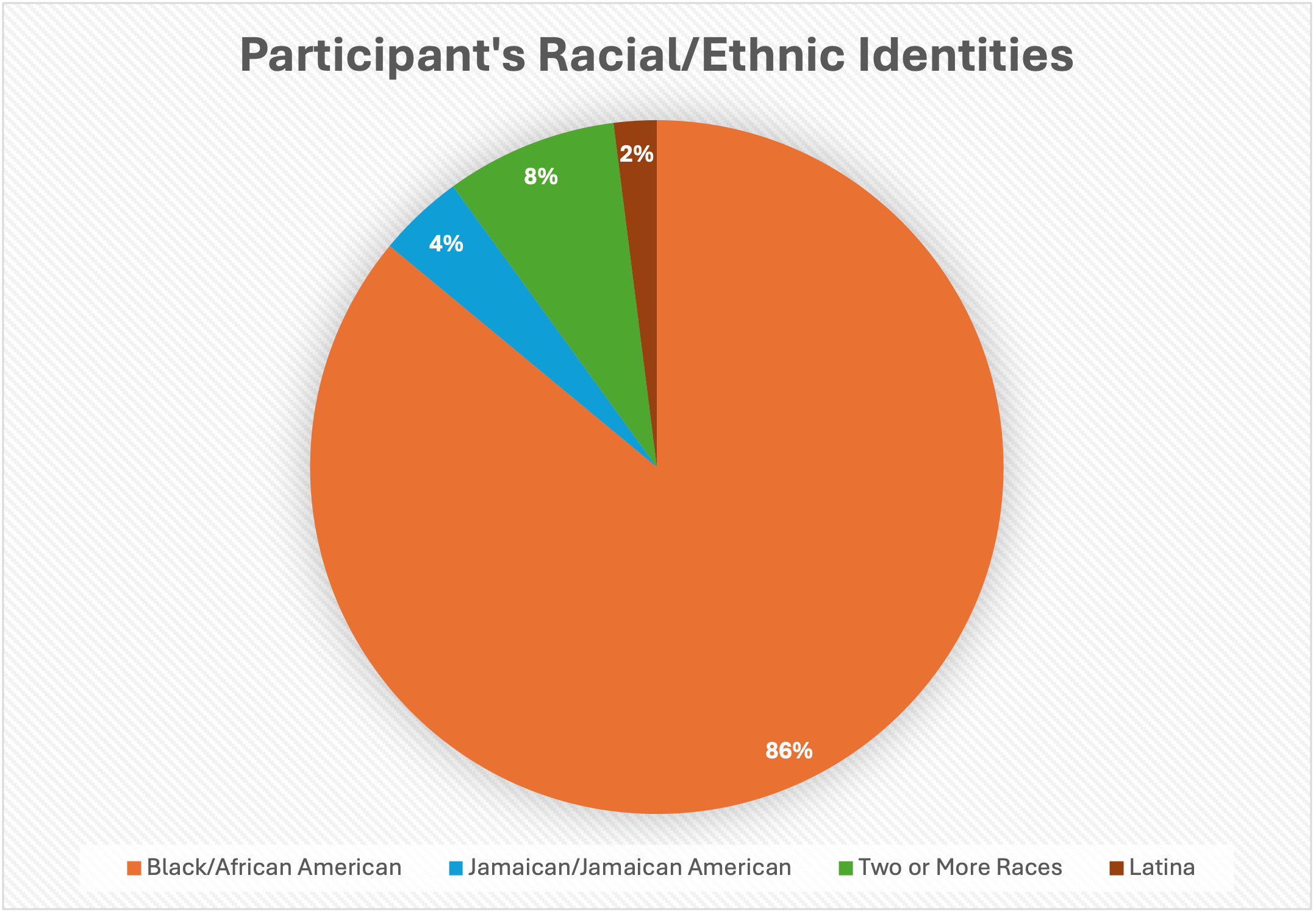
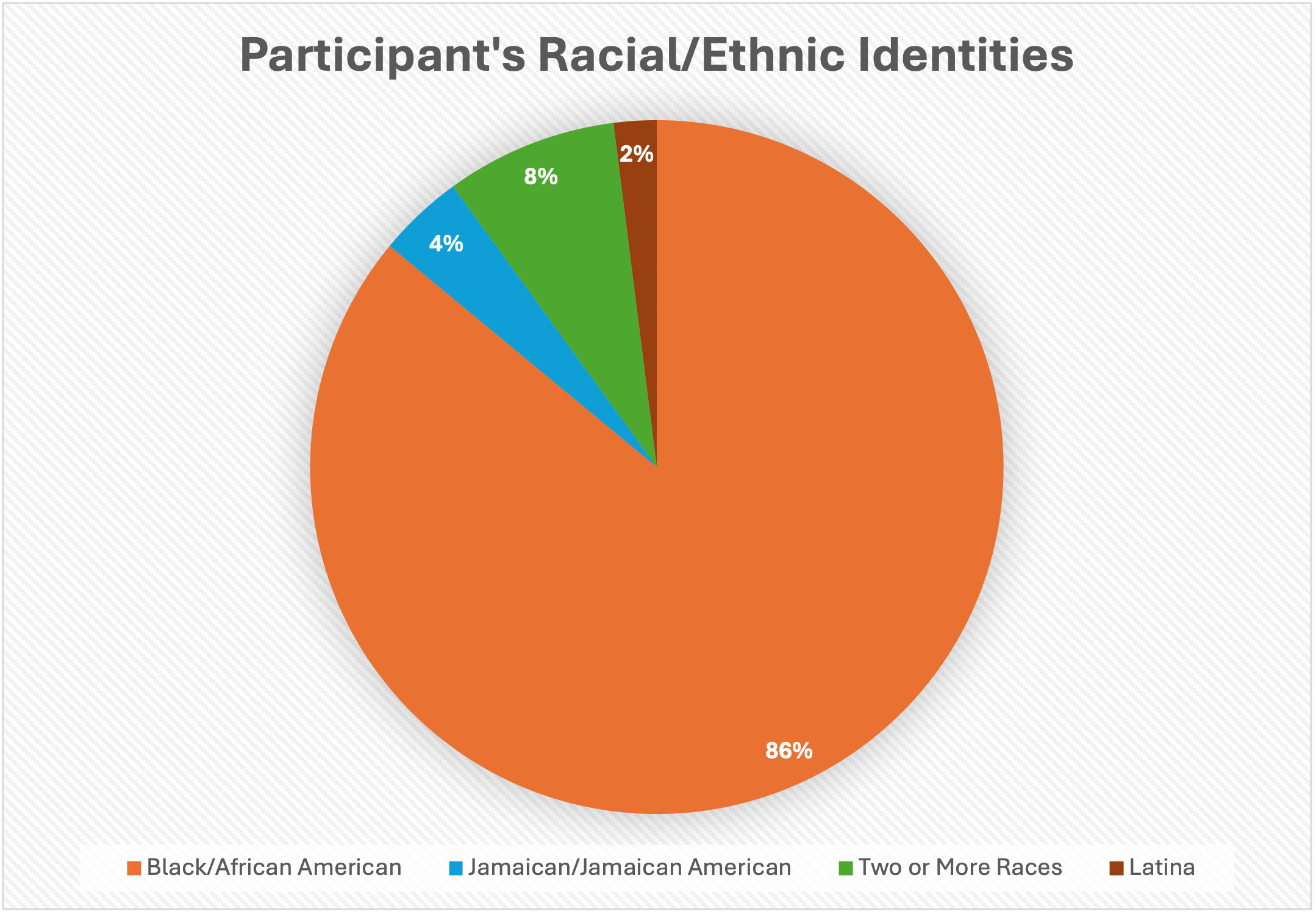
The case is an OST STEM summer camp at the Zora Neale Hurston Academy (pseudonym) during the summer of 2024. The Hurston Academy is a single-gender, all-girls school located in the southeastern United States. The STEM curriculum, a Barbie-theme STEM curriculum, was designed and taught by Black women representing the Code & Crown Collective (pseudonym). Fifty girls with varying racial/ethnic identities (see Chart 1) attended the camp and were divided into three groups based on their grade level. The green group consisted of 16 girls entering grades five through six. The blue group consisted of 17 girls entering grades five through seven. Finally, the orange group consisted of 17 girls, in seventh and eighth grade.
Data Sources
Data sources for this study include all of the components of the Barbie theme STEM curriculum: a) instructional materials, such as four weekly STEM instructional slides, b) a digital story slide deck, and c) the book titled “Marley Dias Gets It Done: And So Can You!” by Marley Dias. Instructional materials comprised ten STEM activities, such as engineering Barbie’s Dream House and building balloon-powered cars, as well as targeted experiences, such as flying drones and using an artificial intelligence (AI) tool, Copilot, to generate images of themselves in future STEM careers. Furthermore, the curriculum featured Black women from various STEM disciplines as guest speakers to discuss their discipline and career trajectory. It also incorporated STEM field trips, such as visits to the Delta Flight Museum. The digital story (DS) slide deck included two weeks of instruction; part one explained what a DS is and provided an example of a complete one. Part two included a guide to help participants create their DSs in the summer STEM program. Additional data used include photos taken during the STEM camp.
Data Analysis
We employed a thematic analysis as outlined by Baden & Major (2012), which was informed directly by the research question and the Afro-HILL framework to ensure theoretical alignment. A deductive and iterative coding process was utilized to expand categories and summarize the codes into themes. We immersed ourselves in the data through repeated readings and note-taking to generate codes that mirrored the methods employed by Soysal (2022). In the first round of coding, author one conducted an in-depth analysis and provided authors two and three with thorough documentation of the coded curriculum materials (four weeks of instructional slides, STEM activities, and a digital story slide deck) utilizing the Afro-HILL framework. In round two, we met virtually and used a dialogical approach to collaboratively discuss the data, categorized codes into specific themes to ensure they were connected to our conceptual framework. This thematic approach is similar to that of Nyachae (2016) and Sanchez-Gatt (2023), who used curriculum materials in their analyses. At the final virtual data analysis meeting, and through collective discussions guided by our onto-epistemologies, we refined and derived meanings for each theme (see Table 2). For example, the theme “Liberation Towards Just STEM: Worldbuilding and Agency” emerged by virtue of three rounds of coding. To establish validity and credibility, data triangulation was used across multiple data sources, including instructional slides, STEM activities, and photos. The findings illustrate how Afro-HILL reveals patterns and insights related to liberatory practices used in a STEM program, thereby filling the gap in the literature for models used with Black girls. The section below summarizes the main themes that emerged in our data as seen through the Afro-HILL model.
Findings
Our findings demonstrate how the Afro-HILL model, when applied to an OST STEM environment, helps understand how the program curriculum promotes Black girls’ thriving in STEM. In using Afro-HILL to make sense of the phenomenon, we highlight the intentional curriculum decisions made by the curriculum and program designers that facilitate futurity through mentorship, incorporate historical representation, validate Black girls’ STEM ideas and identities, and foster a space of liberation and worldbuilding.
Mentoring Towards STEM Careers: Recognition of Black Girls’ Futurity
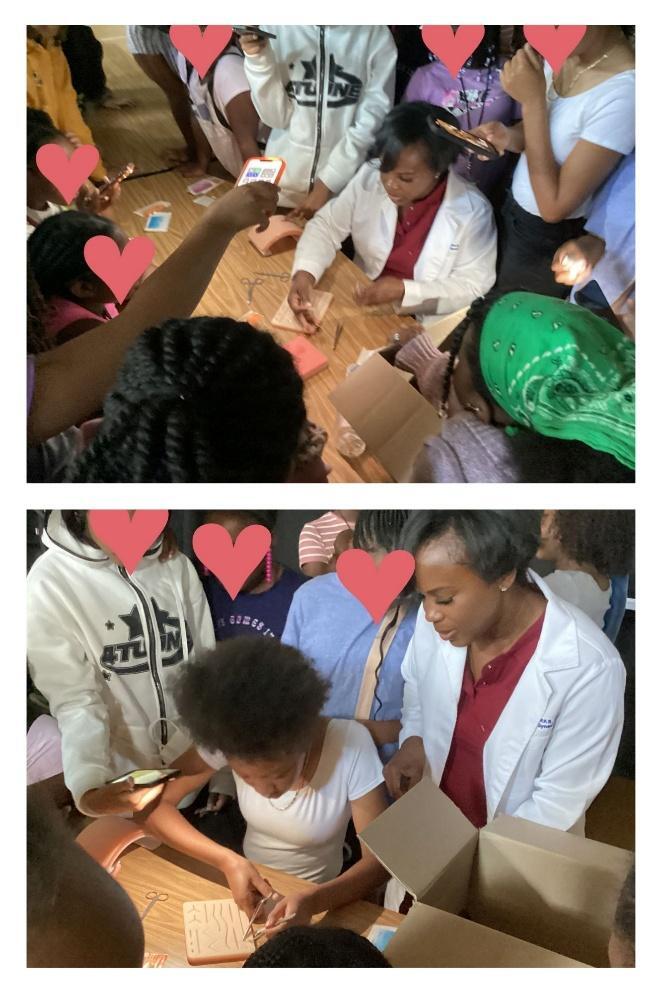
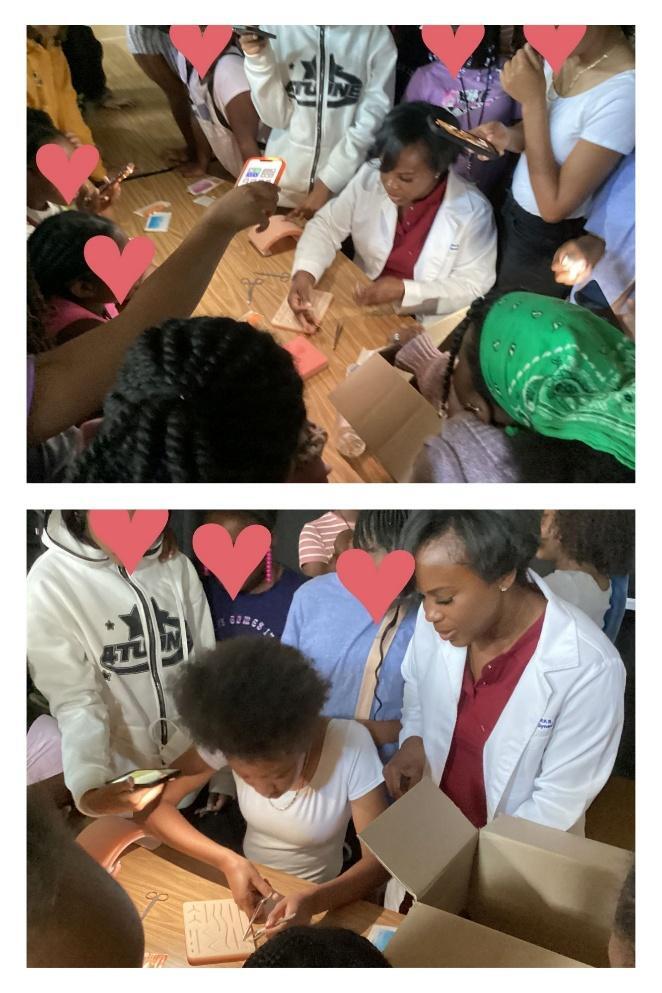
The first theme that emerged notes the impact of trusted adults’ actions on Black girls’ interests in STEM careers. Afro-HILL positions mentoring as a dynamic and reciprocal process by which guidance and advice are exchanged from personal and collective experiences in relation to the fields of STEM. They provided the girls with opportunities to view Black women in STEM professions. That is, mentors provided the girls with opportunities to envision STEM worlds as Black girls without having to assimilate or accommodate their identities as Black girls to fit hegemonic assumptions about who can be in STEM and what counts as STEM. For example, guest speakers were selected based on their shared identities with the girls and their expertise in STEM-specific disciplines. The specifically chosen mentors were intentional because they served as evidence that Black girl futurity already exists. As noted in Figure 2, guest speakers from STEM backgrounds, such as medicine, demonstrated through scaffolding what it takes to become a professional in that field.
Using Afro-HILL also helped identify opportunities in the curriculum for instructors to actively engage with the girls’ ideas as they designed and engineered their Barbie dolls. As noted in week two’s instructional slides and the Fabric Doll Handout, the necessary supplies (cotton fabric, aluminum wire, etc.) and directions (cutting the doll pattern, folding the fabric, and tracing the pattern at the fold) to create soft Barbie dolls were provided. The instructional slides provided an introduction to help instructors effectively present the STEM tasks.
Barbie is Me: Doll Creation – Today you will be creating your very own Barbie doll! I will walk you through each step. (Wk2 Slides, pg.31 & Doll Handout)
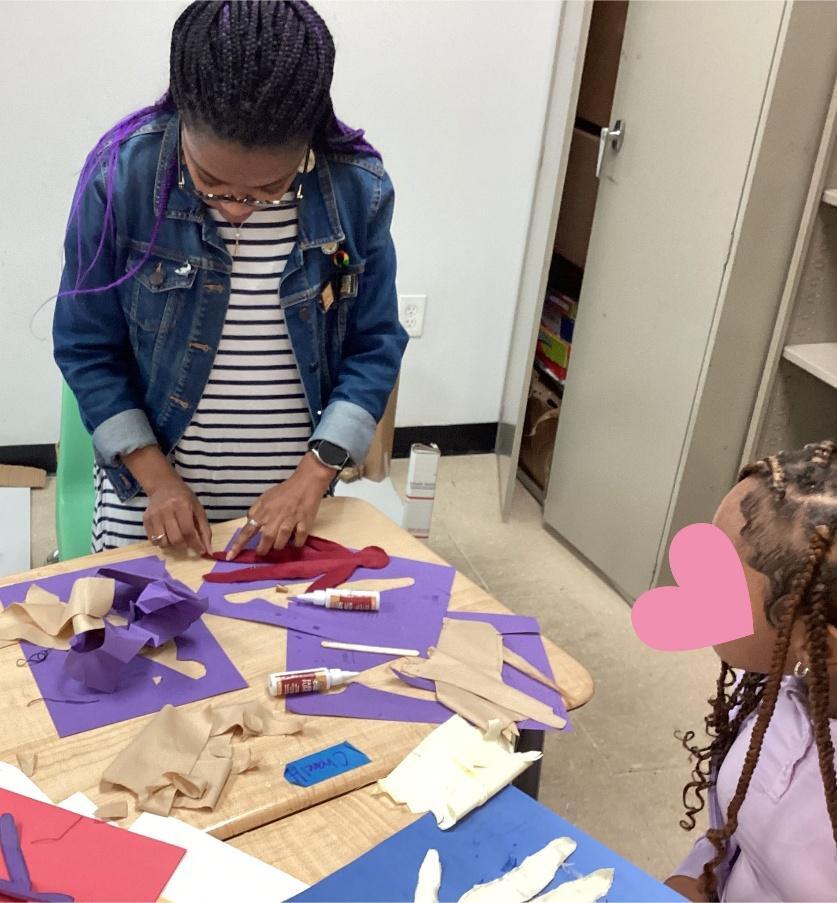
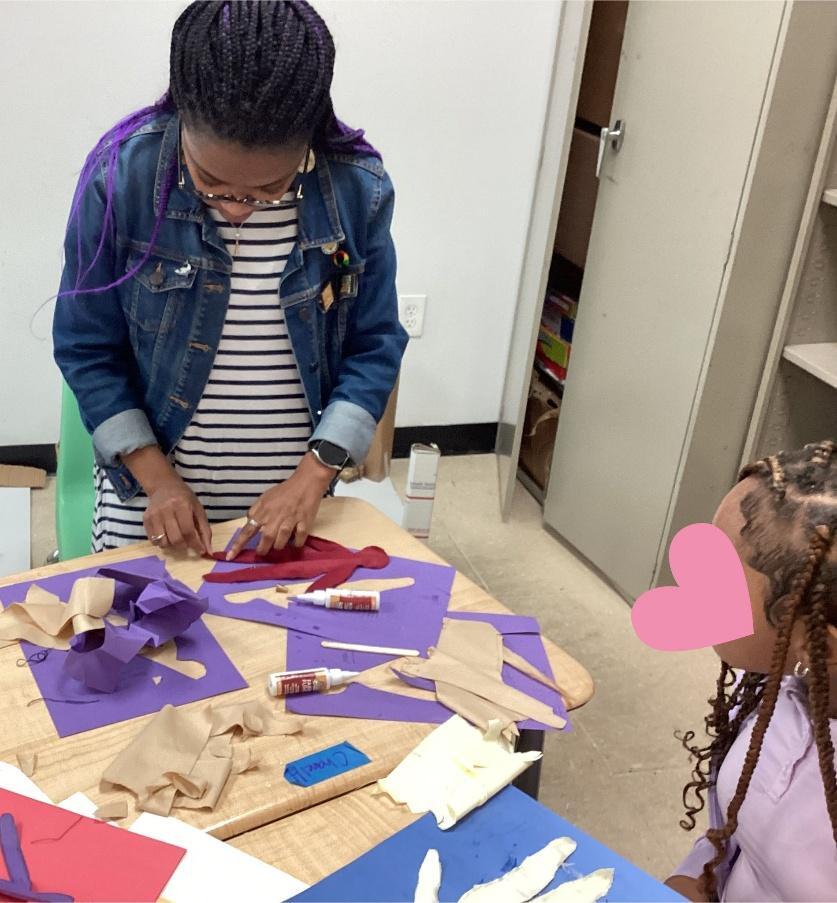
As noted by the expert above, the instructors were told to guide the girls through the doll-making process and provide extra time and support to those who needed it, before moving on to the next step. The lesson consisted of 20 steps to create the doll. Over three days, the curriculum created experiences that supported mentoring relationships between the instructors and Black girls, helping them connect to STEM and perceive themselves as problem solvers and STEM experts. Figure 3 shows how instructors assisted the girls with gluing the fabric of their dolls’ bodies, an example of what it meant for instructors to model STEM innovation and to collaborate with the girls as they built a world for Black girls through STEM learning. In conclusion, the Afro-HILL framework revealed that the curriculum explicitly provided opportunities to connect cultural and STEM interests through the integration of Black women instructors and guest speakers who offered encouragement and feedback during STEM experiences.
Representation Fostered through History and Criticality
Afro-HILL positions representation as rooted in historical knowledge and learning from the past as we critique the present. Within this study, representation highlights the mechanisms employed by Black women curriculum designers to support Black girl participants in envisioning a future in which they have a STEM identity. This process occurred through historical examples and critical questions. In the Barbie-themed STEM curriculum, Barbie’s history was discussed during the first week of STEM camp.
Kitty Black Perkins is known for designing the first Black Barbie in 1980 and significantly diversifying the Barbie doll line. She introduced more inclusive and culturally representative dolls. (Wk 1 Slides, pg. 15)
As seen in this excerpt, the curriculum highlights the awareness of a Black woman toy designer (Kitty Black Perkins) and how she created authentic representations in her designs to challenge negative stereotypes and perceptions of Black girls. Incorporating this information into the curriculum demonstrates the importance of historical representation that provides a positive opportunity for Black girls to see themselves and their cultures in educational spaces across time (past from the example, present as themselves, and in the future as they build new worlds). Thus, the curriculum demonstrates that diversity among toy designers is important, a possible STEM career for these girls, and how diversity in STEM careers can help future Black girls dream of and experience new worlds.
Representation can also be seen in thoughtfully formulated questions that were designed to engage the girls in critical discussions around representation in the toy industry and its ability to envision future worlds for Black girls in STEM.
How has Barbie’s representation evolved? In what ways does Barbie reflect or fail to reflect the diversity of real-world individuals, especially in terms of race, ethnicity, body type, or disability? What is the significance of Black dolls, and how do they empower Black girls? How can we use Barbie to inspire Black girls to pursue STEM? (Wk 1 Slides, pgs. 17-18)
The curriculum excerpt above illustrates how the instructors were encouraged to foster an open discussion that would allow the girls to critically reflect on how Black girls and Black women are represented in the toy industry. It also promoted them to think critically about superficial and authentic representation as the girls were prompted to reflect on the social identities they might share with Barbie, and the value and meaning of those identities as they make connections with STEM. The above questions sparked dialogue about how shared social identities can impact authentic representation when their significance is affirmed. Morris and colleagues’ (2021) and Miles and Roby’s (2022) research prioritize collective experiences to help build and maintain relationships between Black girls and Black women. Our study extends their research by exploring this possibility within an elementary STEM education setting, demonstrating how the representation in the Afro-HILL model can support Black girls’ STEM identities and challenge the narrative of who can participate in STEM. These examples demonstrate how the Barbie-themed curriculum sparked interest in STEM fields and aimed to inspire Black girls to pursue STEM careers in the future. In summary, our framework illuminated that the curriculum purposefully centered Black girls’ multiple identities through authentic and historical representations of Black women in STEM. This curriculum incorporation allowed the girls to challenge stereotypes of who belongs in STEM while offering time to reflect on the possibility of engaging in STEM in the future.
Validation to Bolster Belonging Towards Affirming Experiences
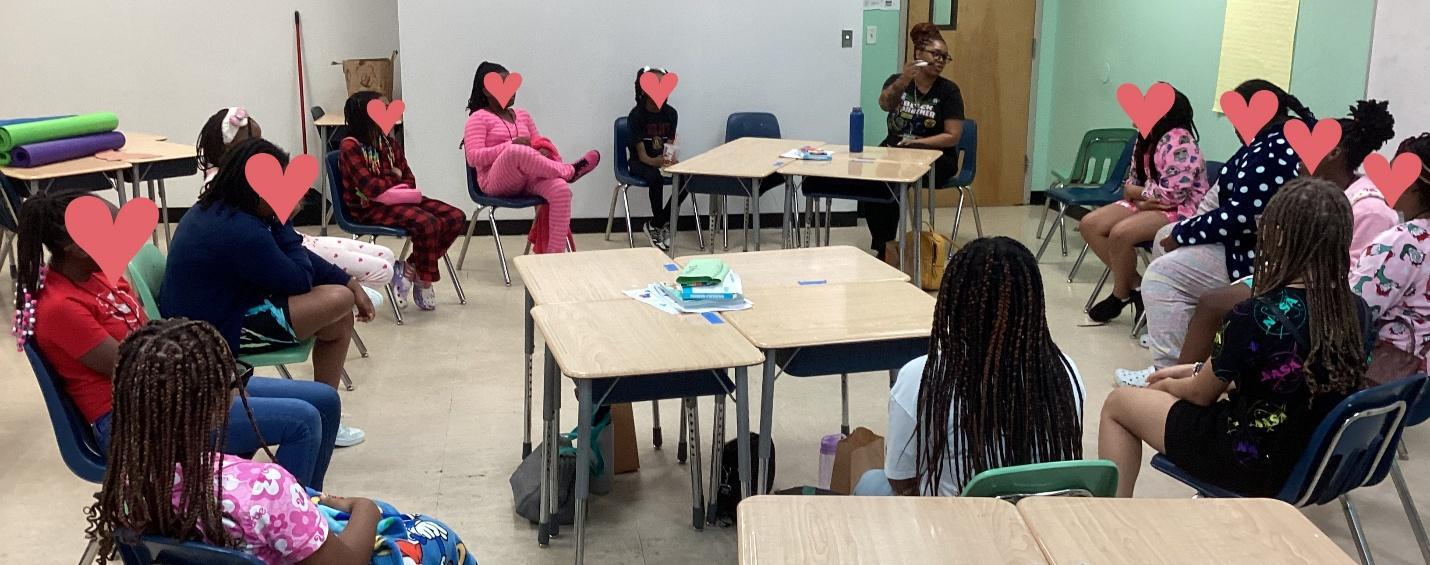
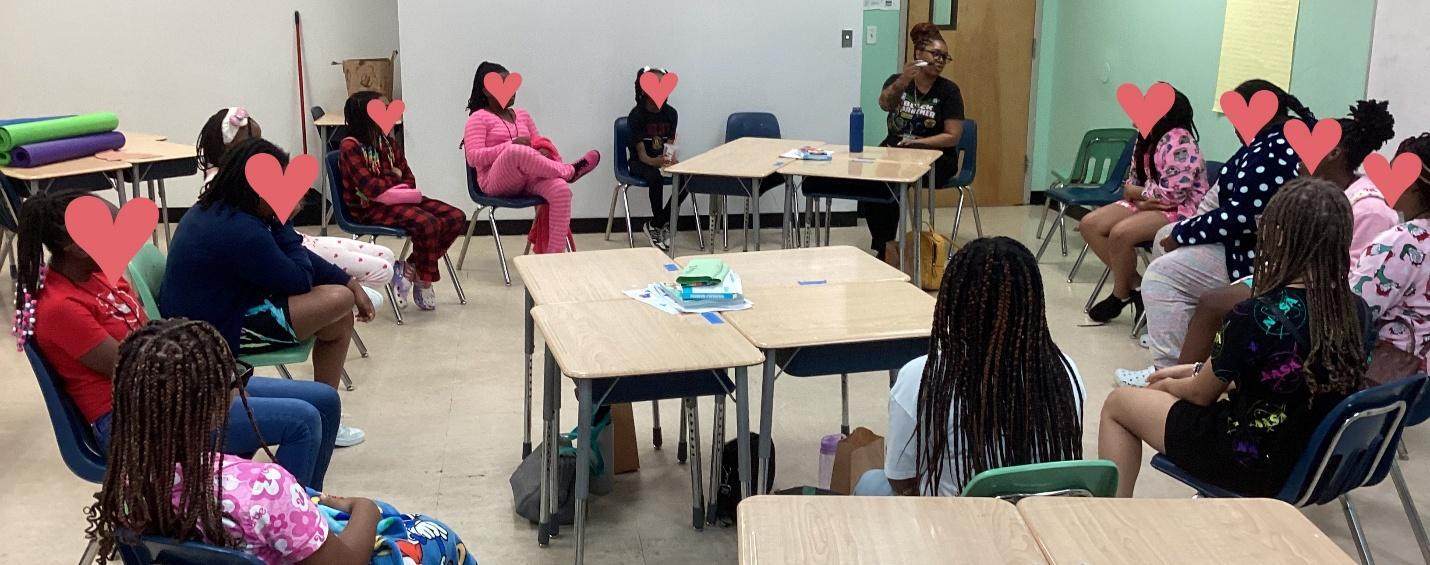
As the third principle of the framework, the term validation refers to joyful experiences Black girls had with their peers and instructors, as positive words of affirmation are utilized to praise their contributions and knowledge production. These validation methods liberated the girls from negative experiences they might have had in formal STEM spaces. Validating Black girls’ STEM ideas and knowledge production is vital for their success (Wade-Jaimes et al., 2021). By virtue of activities like Sista Circles, the curriculum included opportunities for instructors, mentors, and peers to validate the girls’ STEM ideas. Sista Circles were spaces where the instructors and girls shared their self-care experiences and their importance for their well-being (Figure 4). During the Sista Circle, the girls and instructors exchanged self-care strategies and reflected on the importance of their STEM success. Through this activity, the curriculum aimed to cultivate a sense of safety that would lead the girls to feel they belong in this STEM world. An example of a Sista Circle prompt includes: “Just because I am ____ does not mean I am ____.” (Wk 2 Slides, pg. 16)
During the Sista Circles, the instructors were encouraged to acknowledge and affirm the girls’ feelings as valid and important, and to hold space for the girls who needed to share stories behind the weight and heaviness of their answers to the prompt. The STEM curriculum provided various opportunities for the girls’ experiences to be validated by their instructors and mentors as they engaged with the girls during Sista Circles. A guide to assist instructors in facilitating the Sista Circle is found in the notes section of the week 2 Slides, utilizing the above prompt along with an example of how the prompt could be completed (e.g., Just because I am a female does not mean I am weak.). The Sista Circle allowed girls to share their experiences related to the prompt, to heal when their experiences were heavy, and to be celebrated and affirmed by their peers and the adults in the space (Dunmeyer et al., 2023). Afro-HILL helps illuminate how validation can be operationalized: through identity-specific, experience-affirming strategies (e.g., affirmations in Sista Circles) implemented through culturally relevant means. In essence, the intentionally designed curriculum created opportunities for both instructors and peers to validate the girls’ knowledge production through positive interactions.
Liberation Through Black Girl STEM Onto-Epistemologies Just STEM Access
Liberation, in Afro-HILL, is framed as an act of worldbuilding that centers Black girls’ ways of being and knowing in STEM. In STEM praxis, this can be seen as implementing culturally inclusive practices, promoting equitable access to STEM resources and opportunities for engagement, co-constructing knowledge with learners, and connecting STEM learning to inequities in Black girls’ communities (Cameron, 2023; Madkins & Morton, 2021). Liberation Through Black Girl STEM Onto-Epistemologies shows how the curriculum facilitated opportunities for Black girls to freely voice their concerns about issues impacting their communities and collectively problem-solve to address inequities through STEM innovations. Onto-epistemology references “the interrelatedness of ontology and epistemology that situates how people make sense of the world (Boveda & Bhattacharya, 2019) through ‘discursive-material encounters with other cultures, bodies, practices, and subjectivities’ (Pedwell, 2010, p. 41)” (T. R. Morton et al., 2025, p. 269). In this regard, the curriculum supported Black girls’ ability to name their STEM realities and experiences and use their STEM knowledge to envision an oppression-free future. Such worldbuilding activities—the creation of digital stories—allowed them to unleash their creative potential.
An example of this process is found in the instructions given to the girls on how to make their digital stories:
-
Digital Story: Your voice, Your story, Be a game changer:
-
You will choose pictures to show who you are (your identity) and what you have learned (STEM knowledge)
-
Use your voice to narrate your pictures
-
Create a 2-3 minute video of your experiences at STEM camp
(Wk 3 DST slides, pg. 4)
-
The selection above illuminates the guidelines given that supported Black girls’ autonomy and freedom to choose which pictures they would take during their camp activities to include in the stories they felt best represented their STEM experiences and futures. Such guidelines highlighted Black girls’ ways of knowing and doing STEM. Through this act of worldbuilding, the girls utilized digital tools to author themselves as a STEM person, to narrate their experiences, and incorporate their voices into worlds where their social identities, knowledge, and being are the norm rather than the exception.
Finally, the Afro-HILL framework identified the liberatory opportunities in the STEM curriculum via the Youth Participatory Action Research (YPAR) project. The lesson began with a developmentally appropriate introductory YouTube video that described the components and purpose of YPAR. This was followed by a discussion on the following questions:
-
What are some impactful issues at Hurston Academy? Jot down your ideas on a sticky note. (2 minutes of individual think time)
-
As a group, share out your issues and why they are important to you. (10 minutes)
-
Decide on the top three issues as a group to share with the class.
-
As a class, choose the issue you want to tackle and explain why.
(Wk 1 slide, pg. 28)
This data excerpt from the STEM curriculum offered space for Black girls’ co-construction of knowledge regarding Black girls’ needs and opportunities associated with their school communities. The YPAR project embedded in the curriculum provided the girls with the opportunity to name their realities and use their STEM knowledge to amplify their voices and ideas on problems that need solving. YPAR in informal science can liberate Black girls from the inequities they face in their formal science classrooms (Miles & Roby, 2022), as it provides a tangible way for Black girls to exercise their agency to produce STEM knowledge while experiencing joy. To summarize, our framework highlights how the curriculum fostered liberation through autonomy, as the girls were able to identify issues of their choosing and work collaboratively to create solutions.
Overall, the Barbie-themed curriculum utilized consistently created opportunities for the girls to choose what topics they wanted to research, ask questions of interest to them, conduct their projects, and share their solutions to the issues. Throughout the Barbie curriculum, Black girls were encouraged to freely explore and engage in STEM without systemic barriers such as limited access to resources or people from dominant social identities questioning their abilities in STEM. This curriculum supported autonomy and freedom to exist in a STEM environment.
Discussion
This study aimed to introduce and explore the Afro-HILL framework as a model for understanding how curriculum employed within an OST STEM program can embolden Black girls via their STEM identity development, a necessary approach to address systemic barriers such as the erasure of Black girls in formal STEM settings. Through our findings, the Afro-HILL model identified four critical elements that the OST STEM space implemented to promote transformative experiences for Black girls in STEM. These are 1) providing space to envision and dream, 2) utilizing curriculum that is influenced by cultural and historical knowledge, 3) reinforcing Black girls belong in STEM through joyful experiences, and 4) endorsing Black girls onto-epistemologies in STEM.
The first principle, mentoring, provided opportunities for connections between cultural and STEM interests, as evidenced by the purposefully chosen Black women guest speakers and instructors, who were instructed to create a nurturing and inspiring STEM learning space for Black girls to dream of futures in STEM. These findings align with the STEM SISTA model (Ashford et al., 2017), which emphasizes that the learning environment is shaped by the curriculum, instructors, and mentors. These crucial sources support identity and interests through Black women role models and culturally relevant curriculum in OST STEM settings. This study extends the work of Griffith and colleagues (2017) by demonstrating how positive STEM interactions between adults and Black girls facilitate mentoring relationships and support Black girls’ interest in STEM careers. Black women working in STEM careers shared insights into their future experiences as Black women in STEM, offering encouragement and feedback during STEM projects. As operationalized in this study, Mentoring Towards STEM Careers: Recognition of Black Girls’ Futurity demonstrates how the program mentors fostered connections to Black culture and STEM interests for the Black girls. The Black women mentors functioned as “future selves” of the Black girls who existed in the present.
Afro-HILL’s representation principle emphasizes the need for shared experiences and social identities, grounded in culturally relevant pedagogy and historical knowledge, to support Black girls’ critique of their present. When STEM spaces deliberately use curriculum that centers Black girls’ identities and interests, it helps ensure an inclusive and diverse STEM community, as it allows Black girls to see themselves as people who use STEM to address issues in their communities. Our findings note that curriculum developers who focus on creating informal STEM environments for Black girls should enable them to challenge stereotypes by incorporating diverse, historically grounded, and authentic representations of Black girl identities and interests in the content, problems, and solutions presented. This strategy can empower Black girls, supporting their thriving in STEM rather than merely surviving. Furthermore, this approach enriches the Girls STEM Institute (GSI) model (C. Morton & Smith-Mutegi, 2022) by integrating historical insights that can profoundly impact Black girls’ interests in their future. Two elements were key for this outcome: historical representation of Black girls/Black women in STEM content and the teaching of criticality as a tool to help promote deeper thinking and innovative outcomes that are not superficially tied to social identities.
Validation, the framework’s third principle, views validation as a method to bolster Black girls belonging in STEM through joyful experiences. Within the OST setting, the curriculum provided opportunities for the girls to participate in STEM activities and to engage with their peers. They experienced a mix of excitement and frustration as their peers acknowledged their feelings as valid in those moments. The evidence underscores the significance of positive reinforcement from various sources of encouragement (i.e., Sista Circles, STEM mentors), which are essential for the well-being and success of Black girls in STEM fields. Our findings challenge earlier studies that focus solely on individual change (e.g., Carlone & Johnson, 2007) and instead emphasize the necessity of environmental change to effectively support Black girls in STEM. As instructors held space for the girls to share their stories with each other, together they co-constructed a world where they could hold each other up emotionally and engage in STEM.
The final principle of Afro-HILL, liberation, promotes Black girls’ ways of being in STEM and their production of STEM knowledge. The curriculum allowed the girls to dream as big as they wanted when naming their STEM experiences through the DS and the challenges they could address through YPAR. The opportunity to freely imagine worlds where they can innovate solutions as they design a more just reality for their communities. The theme of Liberation Through Black Girl STEM Onto-Epistemologies can be operationalized through tangible worldbuilding activities the girls engaged in as they designed and created their digital stories. The girls used their agency to choose the images, songs, and their voices to narrate their stories and what it meant to be a Black girl, engage in STEM, and generate STEM knowledge. This perspective aligns with the findings of Miles and Roby (2022), who advocate empowering Black students to actively use their voices to promote the collaborative construction of knowledge in STEM fields. Through these actions, the girls engaged with Afrofuturism’s futurity as they authored themselves into the future, creating a record of their STEM knowledge for generations of Black girls to witness and learn from. This Afrofuturist approach empowers Black girls to challenge dominant narratives about who is entitled to participate in STEM fields. When applied to the design and implementation of STEM spaces, Afro-HILL can create a counterspace for Black girls to create worlds and imagined futures in which they are liberated from oppressive STEM epistemologies and methods and instead experience the joy and fulfillment of STEM. The Afro-HILL framework is necessary, as demonstrated by this case study, as it moves from stating what works to theorizing a liberatory praxis that purposefully integrates Black girls’ cultural and historical experiences in STEM.
Implications
Overall, this study reinforces the notion that intentionally designed informal environments can offer Black girls positive and supportive STEM experiences, thereby nurturing their potential to pursue STEM fields. This study also reveals the power of Afro-HILL to help unpack how and why informal STEM spaces can support Black girls. While previous research has focused on models that identify science/STEM identity or an individual’s STEM experiences as the individual’s fault and in need of change, this study attends to the external environment and how aspects of it influence Black girls’ experiences. When applied to informal STEM curricula, Afro-HILL can be utilized to better understand the curricular factors that support Black girls’ positive experiences as they participate in STEM spaces (e.g., content, facilitator instructions, activities). More specifically, it can help educators see how, when, and where specific curricular choices can foster STEM learning experiences that are “free-er” from the systemic and oppressive structures Black girls experience in STEM spaces. While the content of this study used to understand Afro-HILL was an informal learning environment, the components of Afro-HILL could be applied to a formal learning environment. Future studies that use Afro-HILL to examine formal learning spaces are encouraged.
In practice, the Afro-HILL model can be used to design and implement STEM learning spaces that acknowledge the possibilities of Black identities, embrace Black onto-epistemologies, and promote opportunities for Black worldmaking. This could look like using Afro-HILL to design formal and informal STEM learning environments and activities. Digital Storytelling is an Afrofuturist worldmaking activity that can be used in formal or informal learning spaces with Black girls. This activity is more than just a fun and creative process; it is a method of expression that connects Black girls’ onto-epistemologies and being a Black girl in STEM. It is a way for Black girls to (re)claim their identities, STEM knowledge, and to narrate their futures. Black worldmaking can be seen through Afro-HILL’s principle of liberation, which serves as a method for reforming K-12 STEM environments to center Black girls’ ways of being in STEM and of generating STEM knowledge.
Conclusion
One strength of this study is its research design: as a case study, it focused on a unique STEM program and curriculum, providing insight into program elements that can be generalized in other settings. For example, incorporating a curriculum that is informed by Black cultural and historical knowledge and endorsing Black onto-epistemologies is essential for researchers and practitioners who design STEM environments for Black children. Our findings enhance understanding of the need to design spaces for Black girls to pursue STEM interests. As such, research should be conducted using the Afro-HILL model in other STEM settings that support Black boys, Black children, and Black children with different gender identities to assess the model’s effectiveness in identifying similar environmental components across populations. Other questions remain, such as whether the Afro-HILL model’s effectiveness can be extended to formal STEM settings with Black children. A further study could assess the long-term effects on STEM identity development for Black girls and Black children who participate in STEM programs utilizing the Afro-HILL model.
Limitations
The current study was limited by its context, as the Afro-HILL framework was operationalized within an out-of-school-time (OST) STEM summer camp space. While the context supported the flexibility and liberation from systemic barriers traditionally found in formal education environments, the STEM camps’ context-specific nature limits immediate generalizability. Future research must account for the structural constraints common in K-12 schools to determine how identity-focused pedagogical praxis can be successfully incorporated into formal school settings. Utilizing the Afro-HILL framework in a K-12 setting requires understanding how to navigate institutional barriers while simultaneously maintaining epistemological liberation and the psychological and protective factors identified in the summer camp.
The current research aimed to assess the effectiveness of the Afro-HILL model in identifying how and why OST STEM curriculum components can support Black girls’ engagement and STEM identities. The study’s results indicate that Afro-HILL’s elements are requirements for Black girls to live in a future of Black excellence now, where Black ways of knowing and being in STEM are prioritized, and for Black girls to actively engage in worldbuilding to take control of the narrative of who can participate in STEM and whose knowledge counts. Such outcomes reflect a pedagogical operationalization of Afrofuturism, moving from simply preparing girls for careers in STEM to creating liberated spaces where they are recognized by their peers as already possessing STEM identities. Additionally, the Afro-HILL model is the blueprint for Black worldmaking in STEM. It situates Black onto-epistemologies within STEM as a method that allows Black girls to connect who they are with the technology skills through digital storytelling. Black girls participated in futurity as they engaged with Black women mentors, who offered ways to reimagine time, enabling them to see their futures in the present. Furthermore, the specifically designed curriculum for Black girls by Black women reiterates the necessity of environmental transformation rather than having individuals fit into a particular way of thinking and doing in STEM. Ultimately, the Afro-HILL model demonstrates that when STEM environments are conceptualized through an Afrofuturist framework, they become spaces where Black girls are liberated from restrictive ways of being in STEM. This empowers Black girls to build worlds where they can preserve and transmit their knowledge and experiences for future generations.